



TL;DR: USA therapists are using HIPAA-compliant AI tools like Mentalyc, Upheal, and SimplePractice’s Note Taker to cut documentation time by up to 90%, freeing hours each week for more client sessions instead of paperwork. AI can draft notes, treatment plans, and intake summaries — but it can’t replace clinical judgment, and general tools like ChatGPT should never touch real client information.
Why Documentation Is Quietly Burning Out USA Therapists
Ask any therapist in private practice what actually exhausts them, and it’s rarely the sessions themselves. It’s what comes after: the SOAP note, the treatment plan update, the insurance claim, the intake summary — often stacked up for hours after the last client has left. Industry workforce surveys have put therapist documentation time at somewhere in the range of 15-20 hours a week on top of direct clinical hours, and the backlog of unfinished notes shows up repeatedly as one of the top drivers of clinician burnout in recent APA and NASW workforce data.
That’s the real story behind the rise of AI in mental health practices in 2026. It’s not chatbots replacing therapists — clients still overwhelmingly want a human in the room, and every credible platform in this space says so directly. It’s licensed clinicians using AI to compress the hours of paperwork around each session so they can either go home on time or take on two or three more clients a week without extending their hours.
This guide covers what’s actually working: HIPAA-compliant documentation tools, where ChatGPT fits and where it’s genuinely risky, and how therapists are using AI for treatment plans, intake, scheduling, and billing without compromising client privacy.
HIPAA Compliance Isn’t Optional — Here’s What to Actually Check
Before comparing tools, it’s worth being blunt about this: a lot of platforms market themselves as “HIPAA compliant” while only meeting the bare minimum. For a therapist, that phrase should mean specific, verifiable things, not just a badge on a landing page.
- A signed Business Associate Agreement (BAA) — if a vendor won’t provide one, it cannot legally handle client PHI, full stop.
- Clear data retention and deletion policies — reputable tools delete raw session audio shortly after transcription and specify how long transcripts and notes are retained.
- A statement that client data isn’t used to train outside AI models — this is the detail most trainers skip when reading a privacy policy, and it matters.
- SOC 2 Type II or HITRUST certification — these are independently audited security standards, not self-reported claims.
- Client consent language — your intake paperwork needs to disclose that AI is used in session documentation, and most state licensing boards now expect this explicitly.
If a platform can’t answer these five points in writing, treat “HIPAA compliant” as marketing copy until proven otherwise.
The AI Documentation Tools USA Therapists Are Actually Using
Here’s how the main platforms compare as of 2027, based on their own published compliance and pricing information.
| Tool | What It Does | HIPAA/Compliance | Starting Price (USD/mo) |
|---|---|---|---|
| Mentalyc | AI progress notes (SOAP, DAP, BIRP, GIRP, and more), treatment plans, session analytics (“Alliance Genie”) | HIPAA, PHIPA (Canada), SOC 2 Type II, BAA provided | From about $14.99-19.99 (solo); Group Practice from ~$49.99/seat |
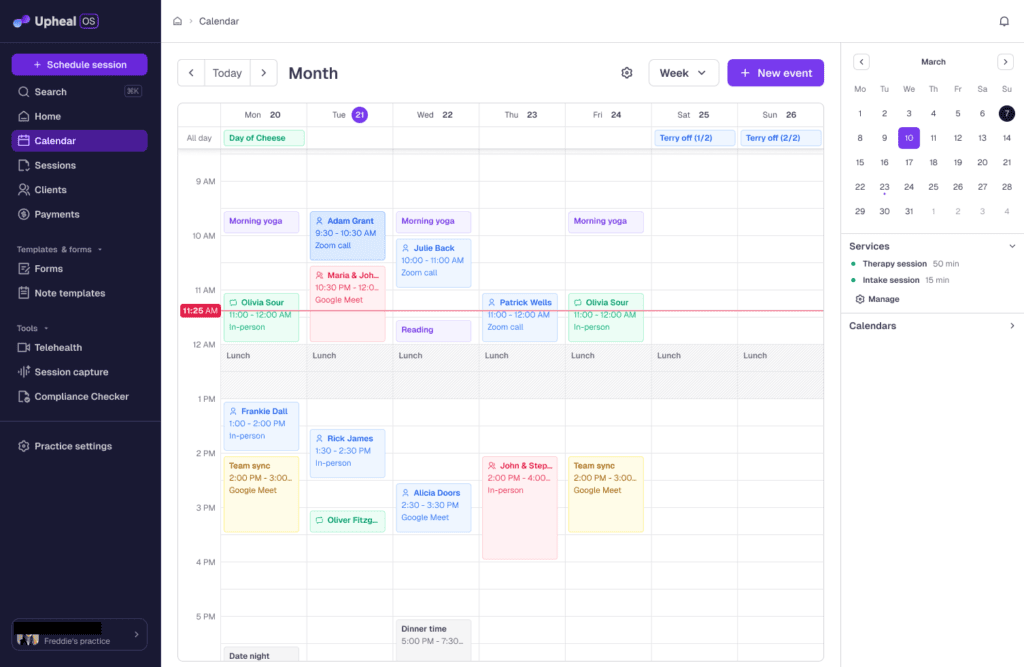
| Upheal | Session recording, AI note drafts, treatment planning with SMART goals, session analytics dashboard | HIPAA, PHIPA, SOC 2; BAA available | Free tier available; paid tiers scale with note volume |
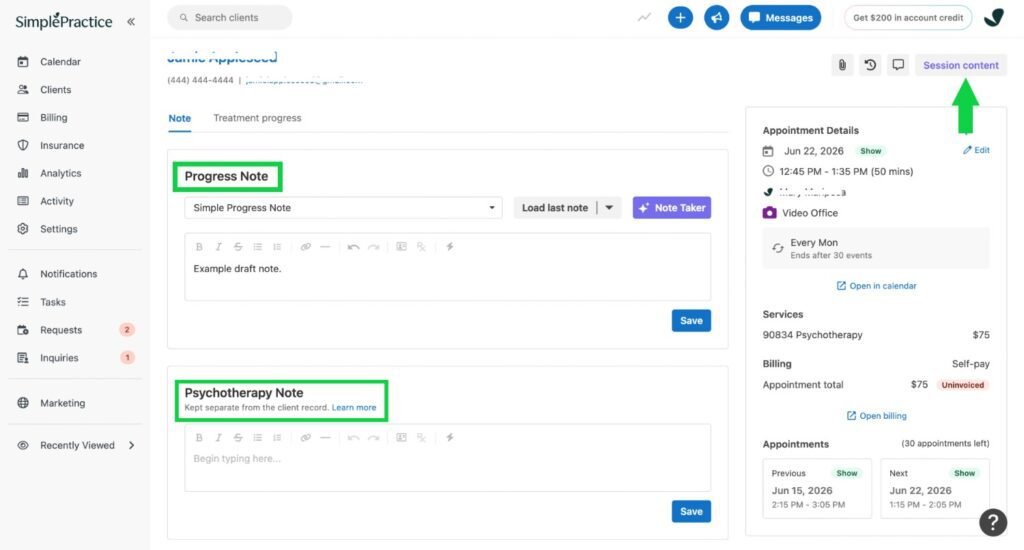
| SimplePractice Note Taker | AI-drafted SOAP/DAP/BIRP notes built directly into the SimplePractice EHR | Covered under SimplePractice’s existing BAA; audio deleted after transcription | Paid add-on (~$35/mo) on top of an existing SimplePractice plan |
| TherapyNotes TherapyFuel | AI scribe add-on inside the TherapyNotes EHR, HITRUST-certified for its AI features | HIPAA, BAA provided, AI-specific HITRUST certification (verified 2026) | About $40/mo per clinician, on top of a TherapyNotes EHR plan |
A pattern worth noticing: tools built exclusively for mental health (Mentalyc, Upheal) tend to support far more note formats and modalities — EMDR, play therapy, couples work — than general medical AI scribes retrofitted for behavioral health. If your caseload includes anything beyond standard individual CBT sessions, that’s worth checking before you commit to a tool.
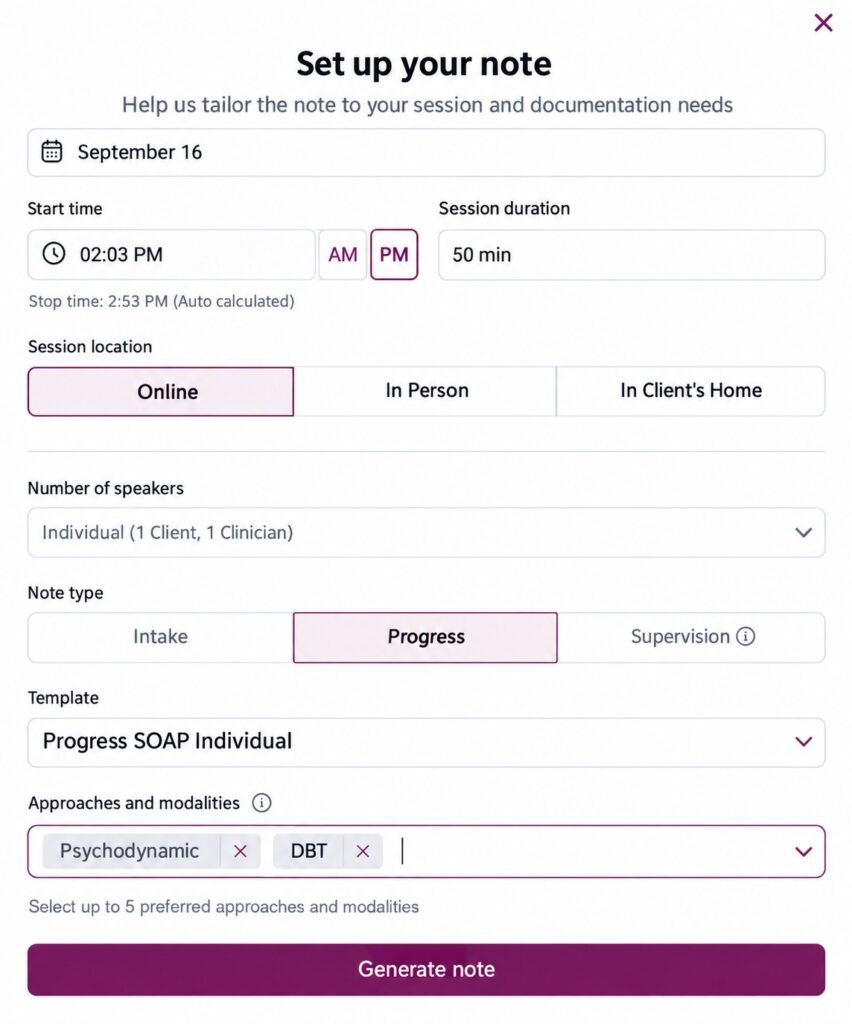
ChatGPT for Therapists: Where It Helps and Where It’s a Real Risk
A lot of solo therapists reach for ChatGPT first because it’s free and familiar. Used carefully, it’s genuinely useful for a narrow set of tasks:
- Drafting a general psychoeducation handout on a topic like sleep hygiene or grounding techniques (with no client details attached)
- Brainstorming session structure ideas for a modality you’re less experienced in
- Writing general practice marketing copy, website content, or a newsletter
- Outlining a generic treatment plan template you then customize per client
Here’s the line that matters: never paste real client information — names, session details, diagnoses, anything identifiable — into ChatGPT or any general-purpose AI tool. Standard consumer ChatGPT has no BAA, isn’t HIPAA compliant, and can retain conversation data for model training unless you’re on a specific enterprise agreement with a signed BAA in place. That single mistake is the fastest way to create a real compliance problem in a practice that’s otherwise doing everything right. If you want AI drafting help for actual client documentation, that’s what purpose-built, HIPAA-compliant tools like Mentalyc or Upheal exist for.
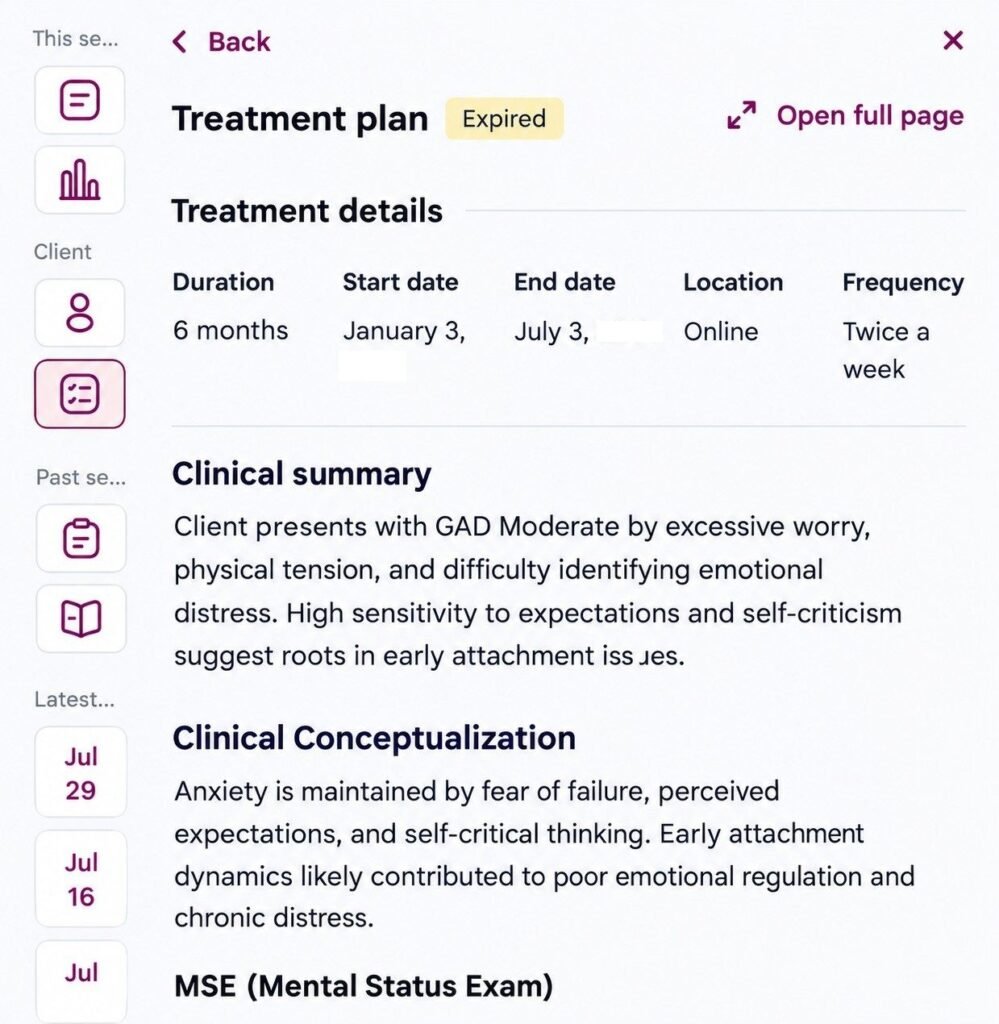
AI for Treatment Plan Writing
Treatment plans are one of the most time-consuming parts of intake, especially when insurance requires specific, measurable goals tied to diagnosis codes. AI treatment plan generators — built into Mentalyc, Upheal, and increasingly SimplePractice’s Care Aide suite — take a client’s presenting concerns and diagnosis and draft SMART goals and interventions you then review and personalize. The time savings compound at intake, where a full treatment plan can otherwise take 30-45 minutes to write from scratch.
AI for Therapy Session Documentation
This is the single biggest use case, and for good reason — it’s where AI saves the most measurable time. Tools like Mentalyc report clinicians saving up to 90% of documentation time by converting a recorded session, dictation, or typed summary directly into a structured note in SOAP, DAP, or BIRP format. The workflow is consistent across most platforms: record or upload, review the AI-generated draft, edit for clinical accuracy and tone, and sign. The note is always yours — AI drafts it, you’re still the clinician who finalizes and takes responsibility for it.
AI for Mental Health Practice Management
Beyond notes, AI is showing up in the administrative side of running a practice: automated appointment reminders that cut no-shows, AI-assisted scheduling that fills cancellations faster, and client-facing chat that handles routine questions like “what’s your cancellation policy” without pulling a therapist away from client work. If admin work outside of documentation is your bigger time drain, our broader look at AI productivity tools for 2026 covers scheduling and inbox tools that pair well with any EHR.
AI for Therapy Client Intake
Intake paperwork review is another quiet time sink. Several practice management platforms now use AI to summarize a new client’s intake forms — presenting concern, history, current medications, prior treatment — into a concise clinical summary a therapist can review in two minutes instead of reading five pages of handwritten or typed responses cold. This doesn’t replace the intake session itself, but it means walking into that first session already oriented to what matters most.
AI for Insurance Billing in Therapy Practices
Billing is where AI overlaps with the business side of running a practice rather than the clinical side. Platforms like SimplePractice and TherapyNotes use AI-assisted coding suggestions to help match session notes to the correct CPT codes, and some flag documentation gaps that would otherwise trigger a claim denial before the claim is ever submitted. For solo practitioners without a billing service, this is often the difference between claims going out same-day versus sitting for a week.
Is There a Free AI Tool for Therapists?
Yes, with real limits worth knowing before you rely on one. Upheal offers a free tier covering unlimited typed or dictated note summaries and manual session upload, though AI-generated notes from live recordings are typically gated to paid tiers. Mentalyc’s 14-day free trial gives full access to test the workflow before committing. For general drafting tasks that don’t involve real client data — marketing copy, generic psychoeducation content, session structure ideas — ChatGPT’s free tier is a reasonable starting point. For a broader set of no-cost options across categories, see our free AI tools for 2026 roundup.
Is It Safe to Use AI as a Therapist?
It’s safe when the tool is purpose-built, HIPAA compliant, and used the way it’s designed to be used: as a drafting assistant that you review and finalize, not an autonomous decision-maker. It becomes unsafe the moment client information ends up in a tool without a BAA, or when a clinician signs off on an AI-drafted note without actually reading it for accuracy. The clinical judgment, the relationship, and the legal responsibility for what’s in the chart all stay with the licensed therapist — AI only changes how fast the first draft gets written.
How Therapists in the USA Are Using AI Right Now
Solo practitioners in states like California, Texas, and Florida are the fastest adopters, largely because they don’t have a billing department or admin staff absorbing paperwork for them — every hour saved on notes is an hour that goes straight back into either client sessions or personal time. Group practices are adopting AI more cautiously, usually starting with a pilot on two or three clinicians before rolling it out practice-wide, largely due to the added complexity of supervision workflows and multi-clinician BAAs. Across both settings, documentation and treatment planning remain the two most common entry points — billing and marketing AI tend to get adopted second, once a practice has confidence in how the clinical side is handled.
For related reading on how other licensed healthcare professionals are approaching AI adoption, see our guides to AI tools for doctors and dentists and AI tools for nurses in the USA — many of the same compliance considerations apply across licensed healthcare fields.
Common Mistakes Therapists Make When Adopting AI
Most problems with AI in a therapy practice come from setup mistakes, not the technology itself:
- Skipping the consent update. Client intake paperwork and verbal consent scripts need to explicitly disclose that AI is used for documentation. Several state licensing boards now expect this in writing, and it’s a five-minute fix most practices overlook.
- Signing off on notes without reading them. An AI draft can misinterpret a client’s tone, miss a risk indicator mentioned in passing, or use language that doesn’t match your actual clinical judgment. The note is legally yours once you sign it — read every one before finalizing, especially in the first few months.
- Using a free or general-purpose tool for real client data. This is the mistake that turns a productivity win into a compliance incident. If a tool doesn’t offer a signed BAA, no client-identifiable information belongs in it, regardless of how convenient it is.
- Rolling out AI practice-wide with no pilot. Group practices that switch every clinician to a new AI documentation tool on day one tend to see more errors and pushback than practices that pilot with two or three clinicians first, work out template and workflow issues, then expand.
- Assuming one tool covers everything. Documentation, treatment planning, scheduling, and billing AI often live in different products even within the same EHR ecosystem. Confirm what’s actually included in your current plan before buying a separate tool for something you may already have.
How to Start Using AI in Your Practice: A Simple Rollout Plan
- Pick the single biggest time drain first. For most solo therapists, that’s session notes. For group practices, it’s often treatment plan consistency across clinicians. Start there rather than trying to automate everything at once.
- Check what your current EHR already offers. If you’re on SimplePractice or TherapyNotes, their native AI add-ons (Note Taker, TherapyFuel) may cover your needs without adding a third-party vendor and a second login to manage.
- Run a free trial with real (but non-sensitive) test sessions first. Record a practice session or role-play before trusting a tool with actual client content, so you can judge note quality and required edit time honestly.
- Get the BAA in writing before your first real client session. Don’t treat this as paperwork to follow up on later — no BAA means no client data goes near the tool, period.
- Update your intake consent forms. Add a clear, plain-language disclosure that AI assists with documentation, and be ready to explain it if a client asks.
- Review every AI-drafted note for the first month, then spot-check after that. Most therapists find note quality improves quickly, but the review habit should stay — it’s part of the clinical responsibility, not a temporary step.
- Expand to treatment plans, intake, or billing only after documentation is stable. Adding every AI feature at once makes it hard to tell what’s actually saving time versus what’s just changing where the work happens.
Key Takeaways
- Therapist burnout is driven far more by documentation load than by session count, and AI’s biggest win in mental health practice is cutting that time down.
- “HIPAA compliant” should mean a signed BAA, clear data retention policies, no use of client data for AI model training, and independent security audits — not just a marketing claim.
- Mentalyc, Upheal, SimplePractice’s Note Taker, and TherapyNotes’ TherapyFuel are the main purpose-built options for AI progress notes and treatment plans in 2027.
- ChatGPT and other general-purpose AI tools should never see real, identifiable client information — use them only for generic, non-clinical content.
- AI drafts; the licensed therapist reviews, edits, and remains fully responsible for every note and treatment plan that goes in the chart.
Frequently Asked Questions
Can ChatGPT be used as an AI therapist?
No. ChatGPT can offer general, supportive conversation, but it isn’t licensed, can’t assess risk the way a trained clinician can, and has no accountability for outcomes. It also isn’t HIPAA compliant for storing real client information. Anyone in emotional distress should reach out to a licensed therapist or, in a crisis, a crisis line rather than relying on a chatbot.
Is ChatGPT better than my therapist?
They aren’t comparable. ChatGPT can be available at 2 a.m. and never gets tired of a question, but it can’t build the ongoing therapeutic relationship, track your history the way a clinician does, or take responsibility for your care. Most people find AI useful as a supplement between sessions, not a substitute for one.
How are therapists using AI?
Primarily for documentation (session notes, treatment plans), intake summaries, scheduling and reminders, and insurance billing support — the administrative and drafting side of the job, not the therapeutic relationship itself.
Which AI is best to use as a therapist (for documentation)?
Mentalyc is the most widely reviewed option built specifically for mental health documentation, with strong format coverage (SOAP, DAP, BIRP, EMDR, and more) and audited compliance. Upheal is a strong alternative if session analytics matter to your practice, and SimplePractice’s Note Taker is the simplest choice if you’re already using that EHR.
Is there a free AI for therapy documentation?
Yes — Upheal offers a free tier for typed and dictated notes, and Mentalyc offers a 14-day free trial with full feature access. Neither free tier typically includes unlimited AI-recorded session notes.
Is there a completely free therapy app for clients?
Some mental health apps offer free tiers for mood tracking, journaling, or basic CBT exercises, but a completely free, fully-featured therapy alternative doesn’t really exist — and none of them replace working with a licensed therapist for an actual mental health concern.
Which AI chatbot is best for mental health support between sessions?
This varies by what someone needs it for, and it’s worth being cautious here — mental health-focused chatbot apps vary widely in clinical oversight and evidence behind their approach. Anyone considering one should discuss it with their actual therapist first, and it should never replace ongoing care or emergency support.
Is AI replacing therapy?
No. Every major platform and survey in this space, along with professional bodies like the APA, points the same direction: demand for licensed human therapists keeps growing, and AI adoption in the field is concentrated in documentation and admin work, not in replacing the clinical relationship.
Is it safe to use AI as a therapist?
Yes, when using HIPAA-compliant, purpose-built tools with a signed BAA, and when every AI-drafted note or plan is reviewed and finalized by the licensed clinician before it goes in a client’s chart.
Is there a free AI note-taking app for therapists?
Upheal’s free tier is the most commonly cited option for basic AI-assisted note-taking without a paid subscription, though it comes with real feature limits compared to paid plans.
What is the best free app for therapy (for clients)?
There isn’t a single standout free option that substitutes for actual therapy. Free mental health apps are best used as a supplement — mood tracking, journaling, guided exercises — alongside professional care, not instead of it.
Building the Right AI Setup for Your Practice
Off-the-shelf tools like Mentalyc and Upheal cover most solo and small-group practices well. But larger group practices, specialty clinics, and behavioral health organizations sometimes need something none of these platforms offer out of the box — a custom-built, HIPAA-compliant system that ties documentation, scheduling, billing, and your existing EHR together in one workflow built around how your practice actually runs. If that’s the gap you’re running into, Zatiqsol builds custom AI-powered and HIPAA-compliant software for healthcare and mental health practices. Get in touch with the Zatiqsol team to talk through what a tailored setup could look like for your practice.
“The therapists pulling ahead in 2027 aren’t working more hours — they’re spending fewer of them on paperwork and more of them actually with clients.”

AI Nexte Editorial Team researches, tests, and reviews AI tools, workflows, and automation platforms for businesses, creators, and professionals. Our content is based on hands-on testing, industry research, feature analysis, and real-world use cases.








No Comments