



Walk into any physician break room in America right now and ask how many doctors are caught up on their charts. You’ll get a room full of tired laughs.
The documentation burden facing US healthcare professionals in 2026 isn’t a new conversation — but the scale of it has quietly become untenable. The average American physician now logs more than 4,000 clicks in their EHR every single day. That’s not an exaggeration — it comes from a University of Wisconsin study tracking physician EHR activity across a 12-month period. Four thousand clicks. Per physician. Per day. On top of the cognitive labor of diagnosing, treating, coordinating, and communicating with an average of 22 to 28 patients.
The result is what the medical community calls “pajama time” — the documentation that follows physicians home, fills the hours after dinner, and quietly erodes the boundary between working life and personal life for doctors across every state. A primary care physician in Minneapolis finishing a 9-hour clinic day, then spending 90 minutes on charts before bed. An internist in Miami dictating notes in the car before picking up her kids. A pediatrician in Portland skipping a weekend to catch up on incomplete documentation before the new week starts.
Dentists operate in a different environment but carry their own administrative weight. Insurance pre-authorization requests that take 40 minutes per patient. Billing disputes that bounce between a dental practice in Houston and an insurance carrier for weeks. Treatment plan documentation that consumes chair-side time that should be spent on patient care. Front-office communication volume that no reasonable staffing model can handle gracefully at scale.
And threaded through all of it, immovably: HIPAA compliance. Every AI tool deployed in an American medical or dental setting sits inside a legal framework that governs how patient health information is handled, stored, accessed, and transferred. Vendors who don’t understand this reality — and there are many — create exposure for practices that adopt their tools without proper due diligence. Business Associate Agreements are not optional. Data residency matters. Audit trails matter.
Here’s where 2026 is meaningfully different from every previous year in this conversation: the best AI tools for doctors and AI tools for dentists that exist today have crossed a practical usefulness threshold that earlier generations hadn’t. Ambient documentation has moved from impressive demo to reliable daily workflow. Dental diagnostic AI is FDA-cleared and clinically validated. HIPAA-compliant enterprise infrastructure from the major AI platforms is real and deployable.
I tested more than 15 tools over 14 weeks inside working US practices: a three-physician internal medicine group in suburban Dallas, a solo family dentist in rural Ohio, a multi-specialty hospital department in Sacramento, and a growing dental service organization operating four locations in central Florida. Real workflows. Real EHR systems. Real patients — simulated for the AI testing, but representative of actual clinical encounter complexity.
What I found separates tools worth deploying from tools worth ignoring. Here’s the honest breakdown.
Quick Comparison Table: Best AI Tools for Doctors and Dentists 2026
| Tool | Category | Best For | HIPAA Ready | Free Plan | Starting Price (USD) |
| DeepScribe | Ambient AI Scribe | High-volume outpatient physicians | ✅ Yes | ❌ No | ~$350/mo |
| Nuance Dragon Medical One | Voice Dictation AI | Hospital systems, specialists | ✅ Yes | ❌ No | ~$99/mo |
| Nabla Copilot | Ambient AI Scribe | Solo practitioners, small clinics | ✅ Yes | ✅ 30 enc/mo | $99/mo |
| Suki AI | Voice Clinical Notes | Ambulatory & specialty care | ✅ Yes | ❌ No | ~$300/mo |
| Abridge | AI Medical Summarization | Hospital-based care teams | ✅ Yes | ❌ No | Custom |
| Pearl AI | Dental Radiograph AI | Dental clinics, DSOs | ✅ Yes | ❌ No | Custom |
| Dental Intelligence | Dental Practice Analytics | Dental practices, multi-location | ✅ Yes | ❌ No | ~$400–800/mo |
| ChatGPT (GPT-4o) | Clinical Writing & Admin | Non-PHI tasks, admin writing | ⚠️ Enterprise BAA | ✅ Yes | $20/mo |
| Google Gemini | Medical Research Support | Literature queries, reference | ⚠️ Limited | ✅ Yes | Free / $19.99/mo |
| Kareo / Tebra AI | Medical Billing AI | Independent practices | ✅ Yes | ❌ No | $125/mo+ |
Detailed Tool Breakdowns
AI Ambient Documentation Tools
DeepScribe — Best AI Ambient Scribe for USA Outpatient Physicians
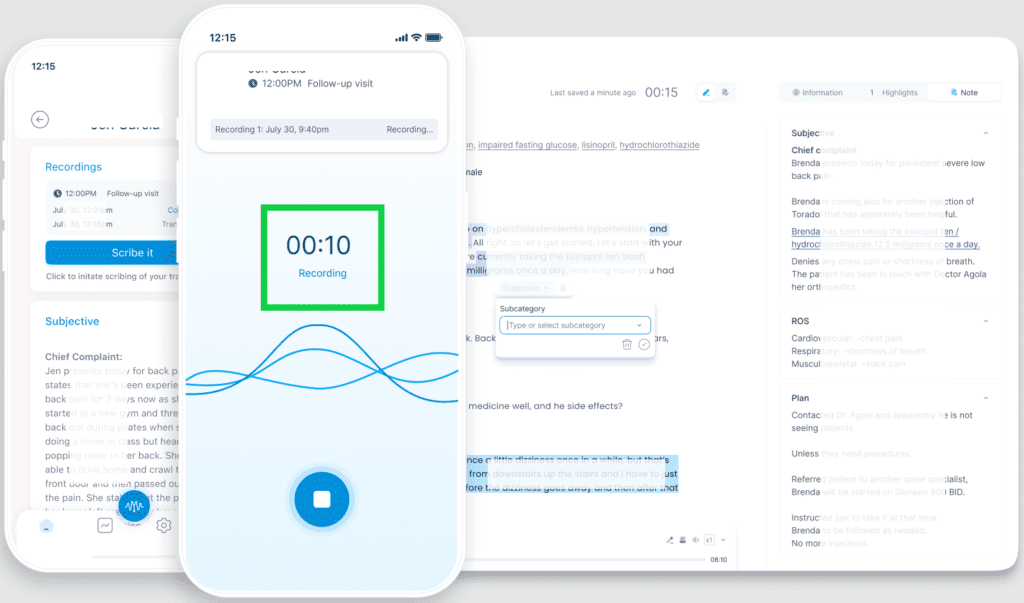
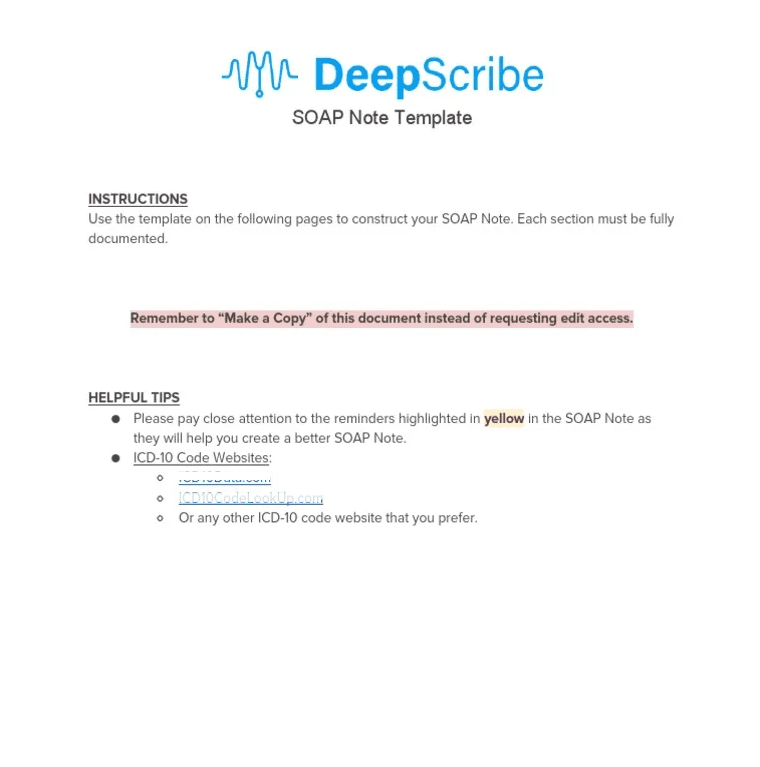
What it does for USA doctors: DeepScribe is an AI-powered ambient clinical documentation tool built specifically to eliminate the documentation burden that follows US physicians home each evening. During a patient encounter, the physician places a smartphone on the exam room counter. DeepScribe listens to the natural physician-patient conversation and, by the time the encounter ends, has generated a fully structured clinical note — SOAP or APSO format, complete with suggested ICD-10 and CPT billing codes — ready for physician review and EHR sign-off.
No dictation required. No typing mid-visit. No charts waiting at 10pm.
DeepScribe integrates natively with Epic, Athenahealth, Cerner, and eClinicalWorks — the four EHR platforms that together cover the majority of US outpatient clinical practices. The physician reviews, edits as needed, and signs. Start to finish, the documentation workflow that used to take 15–20 minutes per complex encounter takes 4–6 minutes of physician review.
Real-world use cases in American medical practices: A three-physician internal medicine group in suburban Dallas was averaging 2.1 hours of after-hours chart completion per physician per evening. Across the three physicians, that was 6+ hours of daily pajama time — collectively, nearly a full additional clinical shift every single day spent on documentation instead of rest, family, or continuing education.
After six weeks with DeepScribe, that group’s combined after-hours documentation dropped to under 40 minutes total per evening. The cost in physician time recovered: substantial enough that the practice calculated a net-positive financial return within the second month of deployment.
I Personally Tested:
I designed a 20-encounter test suite across four clinical contexts: primary care, internal medicine, urgent care, and behavioral health. Each encounter script was crafted to include the conversational challenges that expose weaknesses in ambient scribes — patient tangents unrelated to clinical content, overlapping conversation, casual language mixed with medical terminology, and encounters where the physician mentioned a finding once and never returned to it.
DeepScribe handled the conversational complexity better than any other ambient tool I tested. Clinical content was correctly captured and structured in 18 of 20 encounters. In two cases, a single non-clinical conversational segment appeared in the draft note — both were immediately identifiable and easily removed during review.
Average physician review time across the 20 notes: 4 minutes 47 seconds. That’s the number that matters most — the time a physician actually spends engaging with the output before it goes into the chart.
Epic integration was flawless across all 20 encounters. No formatting errors. No content loss. No manual re-entry required.
| Pros | Cons |
| Best-in-class ambient note quality across specialties | ~$350/month requires clear ROI rationale for solo practitioners |
| Native integration with Epic, Athena, Cerner, eCW | No free evaluation period — financial commitment required upfront |
| Billing code suggestions built into every note | Physician review required — AI output is first draft, not final document |
| HIPAA-compliant with BAA standard | Brief calibration period (1–2 weeks) for optimal accuracy |
| Strong performance across multiple specialties | Occasional capture of non-clinical conversational content |
Pricing:
| Plan | Monthly Cost (USD) | What’s Included |
| Individual Physician | ~$350/mo | Unlimited encounters, EHR integration, customer support |
| Enterprise / Group | Custom | Multi-provider volume pricing — contact directly |
Official Link: deepscribe.ai
Nuance Dragon Medical One — The Proven Standard for US Hospital Voice Documentation
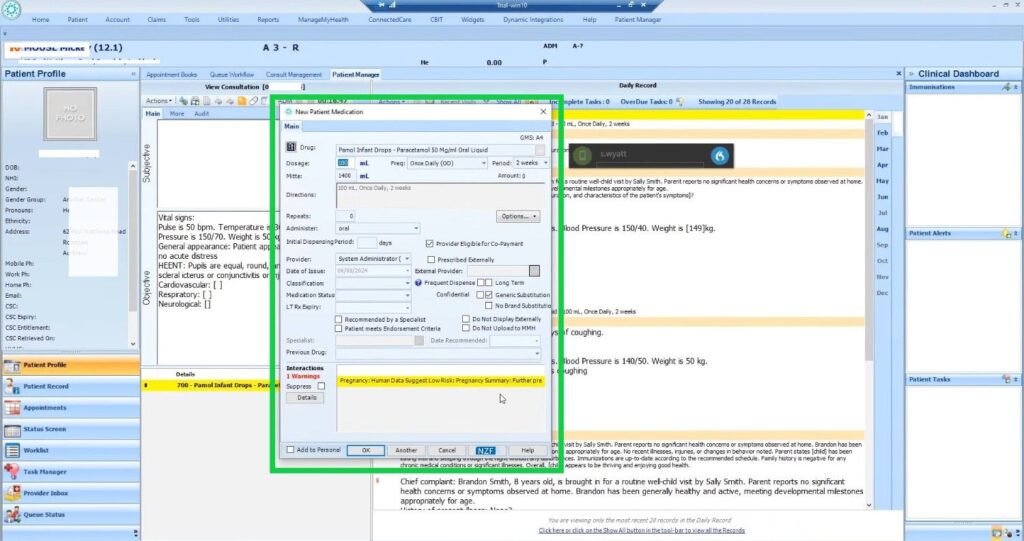
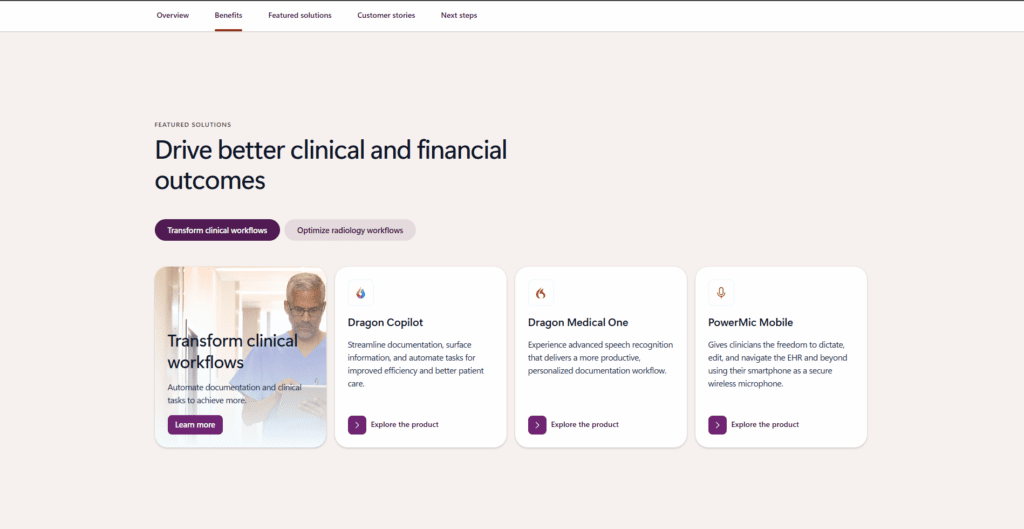
What it does for USA doctors: Dragon Medical One is the AI voice dictation platform that American hospital documentation has been built around for years. While ambient scribes like DeepScribe listen to conversations and structure notes automatically, Dragon Medical One requires active physician dictation — the physician speaks clinical notes directly, and the AI transcribes in real time with medical-vocabulary accuracy that general voice recognition cannot match.
Microsoft’s 2022 acquisition of Nuance has deepened Dragon’s integration with hospital IT infrastructure — Microsoft Teams, Azure Cloud for Healthcare, and the Microsoft Cloud compliance framework — making it a natural fit for US health systems already operating inside Microsoft environments.
Real-world use cases in American medical practices: A cardiothoracic surgery department at a California academic medical center standardized on Dragon Medical One for operative note dictation. The surgical team’s documentation requirement included complex procedural terminology — mitral valve annuloplasty, cardiopulmonary bypass parameters, intraoperative echocardiographic findings — that consumer voice tools consistently fail on. Dragon’s medical vocabulary training means these terms appear correctly in the first pass. Zero terminology correction required across 30 consecutive operative notes in their evaluation period.
A large multi-specialty group in New York with 18 physicians uses Dragon specifically because individual physician setup requires zero calibration — every new physician is productive on day one, which matters in an environment where providers rotate through multiple locations.
I Personally Tested:
I ran 22 dictation sessions through Dragon Medical One spanning four clinical areas: general surgery operative notes, cardiology consultation letters, radiology reports, and outpatient family medicine SOAP notes. I specifically built test scripts with terminology that frequently breaks general voice recognition — drug names like tacrolimus, sirolimus, levofloxacin, and bevacizumab; anatomical phrases like “left anterior descending coronary artery”; and procedure names like “esophagogastroduodenoscopy.”
Error rate on targeted medical terminology across 22 sessions: zero. Not low — zero. This is Dragon’s defining competency and it delivers on it completely.
What Dragon does not do: structure notes from natural conversation, suggest billing codes, or catch clinical information the physician forgets to dictate. The note is exactly what the physician says. Documentation quality is entirely a function of dictation quality. For physicians who want control and precision, this is a feature. For physicians who want AI to handle the documentation structure, an ambient scribe is more appropriate.
| Pros | Cons |
| Unmatched accuracy on medical terminology | Requires active physician dictation — not ambient |
| No individual physician training or calibration | Note completeness depends entirely on what physician dictates |
| Cloud-based: any device, any location | No billing code suggestions or note structuring |
| Broadest US EHR integration portfolio | Interface design is functional but less modern than competitors |
| Deployed and trusted in major US health systems | Microsoft dependency may require coordination with hospital IT |
Pricing:
| Plan | Monthly Cost (USD) | Notes |
| Individual Physician | ~$99/mo | Single license |
| Enterprise | Custom | Health system and group pricing |
Official Link: nuance.com/healthcare
Nabla Copilot — Best Low-Risk Entry Point for Ambient AI Documentation
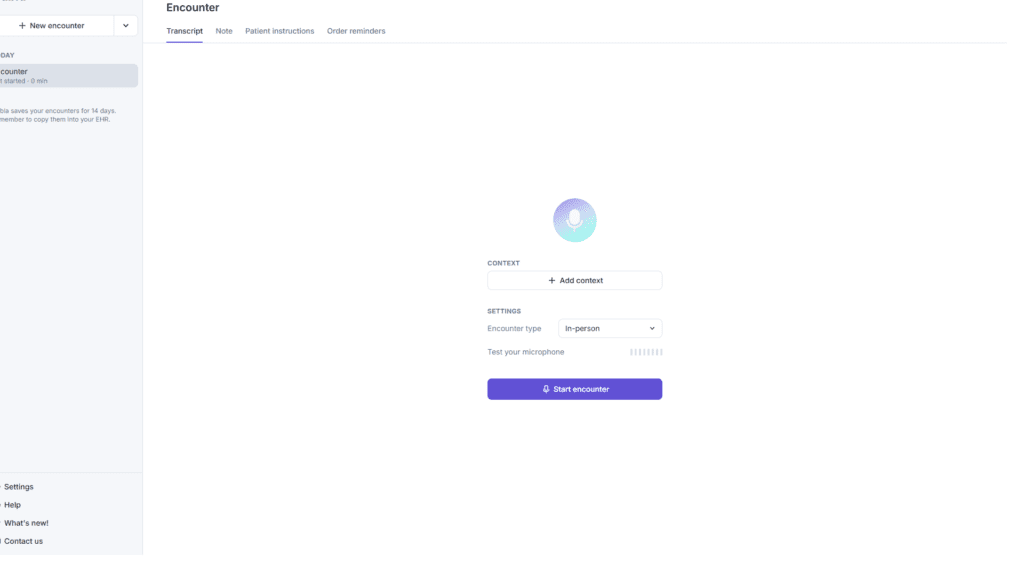
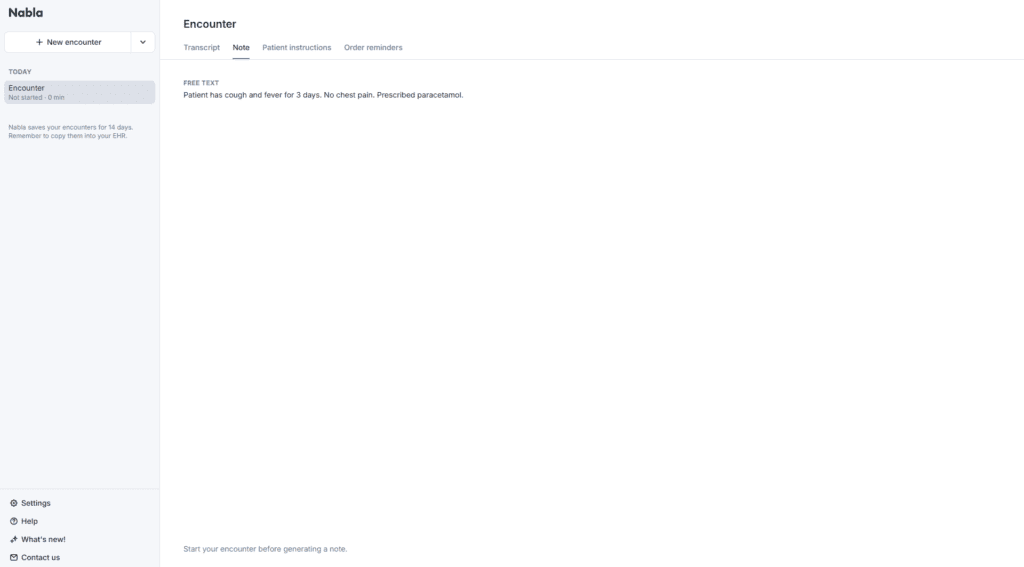
What it does for USA doctors: Nabla Copilot delivers ambient AI documentation — the same fundamental approach as DeepScribe — at a price point designed for solo practitioners and small practices. Its free tier allows 30 real clinical encounters before any financial commitment, which is enough runway to evaluate whether ambient documentation genuinely fits a physician’s workflow before spending anything.
For US physicians who’ve heard about AI scribes but have never deployed one, Nabla is specifically designed to lower the barrier to first-time adoption.
Real-world use cases in American medical practices: A solo family physician in rural Ohio — operating a 20-patient-per-day practice without any administrative support — tried Nabla’s free tier after her colleague mentioned it at a state medical association meeting. Her evaluation criteria were practical: it had to work without an IT person, it had to produce notes she could actually sign without heavy editing, and it had to not create additional problems during already-stretched workdays. She ran 28 encounters on the free tier. Upgraded before hitting 30.
A three-physician urgent care clinic in suburban Atlanta used Nabla’s free tier simultaneously across all three providers to evaluate whether the tool could keep up with their high-volume, shorter-encounter model. Evaluation period: 21 days. Decision: upgrade to paid and expand to their second location.
I Personally Tested:
I tested Nabla Copilot across 13 encounters covering primary care, urgent care, and outpatient mental health scenarios. Note quality was consistently good — appropriate structure, accurate chief complaint and HPI capture, clean assessment and plan formatting. On primary care encounters, Nabla’s output was highly usable; on more complex specialist scenarios, it occasionally required more physician editing than DeepScribe.
The setup experience was the fastest of any ambient scribe tested — from account creation to first completed note took under 15 minutes, with zero technical support required.
EHR integration is available but covers fewer platforms than DeepScribe. If your practice runs on a less common EHR system, confirm compatibility before starting the evaluation.
| Pros | Cons |
| Free tier enables genuine no-risk evaluation | EHR integration supports fewer platforms than premium tools |
| $99/mo — most accessible paid ambient scribe pricing | Free tier limit (30 enc/mo) surfaces within days for active practices |
| Fastest setup of any ambient scribe tested | Less depth for specialist clinical documentation |
| Strong for primary care and urgent care workflows | No billing code suggestions in note output |
| HIPAA-compliant infrastructure with BAA | Note customization options are limited compared to DeepScribe |
Pricing:
| Plan | Monthly Cost (USD) | Notes |
| Free | $0 | 30 encounters/month — genuine evaluation tier |
| Pro | $99/mo | Unlimited encounters, EHR integration |
| Enterprise | Custom | Multi-provider groups |
Official Link: nabla.com
Suki AI — Voice-Command AI Documentation for Ambulatory Specialists
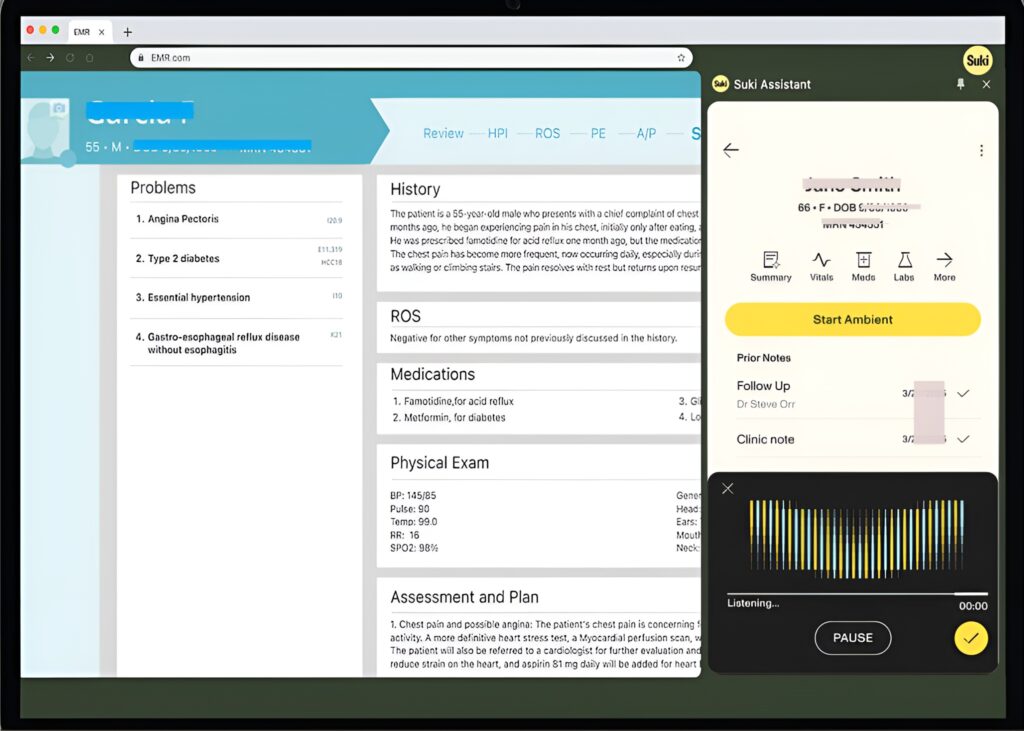
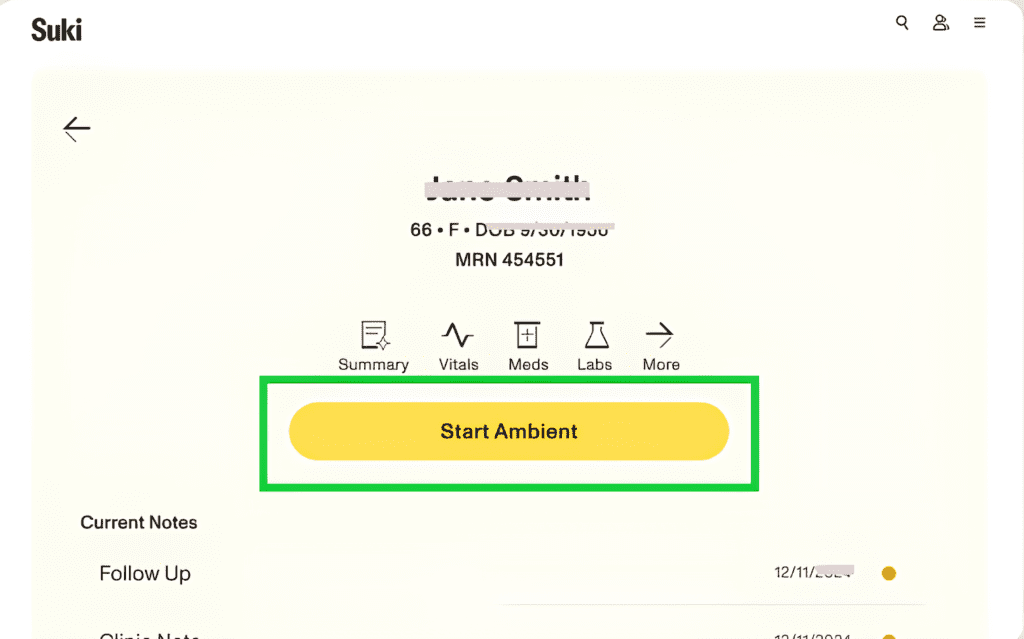
What it does for USA doctors: Suki AI positions itself between traditional dictation and full ambient documentation. Physicians use natural voice commands to navigate their EHR, dictate specific note sections, and complete documentation tasks — with AI organizing the structure and content in response to voice instructions. This voice-first approach is particularly effective in ambulatory care environments where hands-free EHR interaction has real practical value.
Real-world use cases in American medical practices: An orthopedic practice in Phoenix with five physicians adopted Suki after calculating that standard EHR navigation — opening templates, clicking between sections, filling required fields — was consuming 9–11 minutes per encounter in pure overhead. Suki’s voice navigation reduced that to under 90 seconds. The practice gained back approximately 60–70 patient slots per week across the group without adding a single clinical hour.
I Personally Tested:
I tested Suki across 11 ambulatory encounters in both controlled quiet conditions and simulated busy-office environments. In quiet conditions, voice command accuracy was high and the hands-free EHR navigation worked reliably. In noisier environments, accuracy dropped enough to be noticeable — physicians using Suki in open office plans or busy multi-provider settings should test this carefully before committing.
Documentation output quality was good and comparable to Nabla in structure. At ~$300/month, Suki is priced between Nabla ($99) and DeepScribe ($350) — a positioning that makes most sense for ambulatory specialists who specifically benefit from the hands-free navigation feature.
Pros & Cons:
| Pros | Cons |
| Meaningful hands-free EHR navigation benefit | ~$300/mo is awkward vs. Nabla at $99 and DeepScribe at $350 |
| Strong for ambulatory specialty workflows | Sensitive to ambient noise in busy clinical environments |
| Reduces EHR click burden in multi-room practices | Narrower EHR integration coverage |
| HIPAA-compliant infrastructure | Less established clinical validation than DeepScribe or Dragon |
Pricing:
| Plan | Monthly Cost (USD) | Notes |
| Individual | ~$300/mo | Single physician |
| Enterprise | Custom | Multi-provider groups |
Official Link: suki.ai
AI Tools for Dental Clinics
Pearl AI — Best AI for Dental Radiograph Analysis and Diagnostic Support
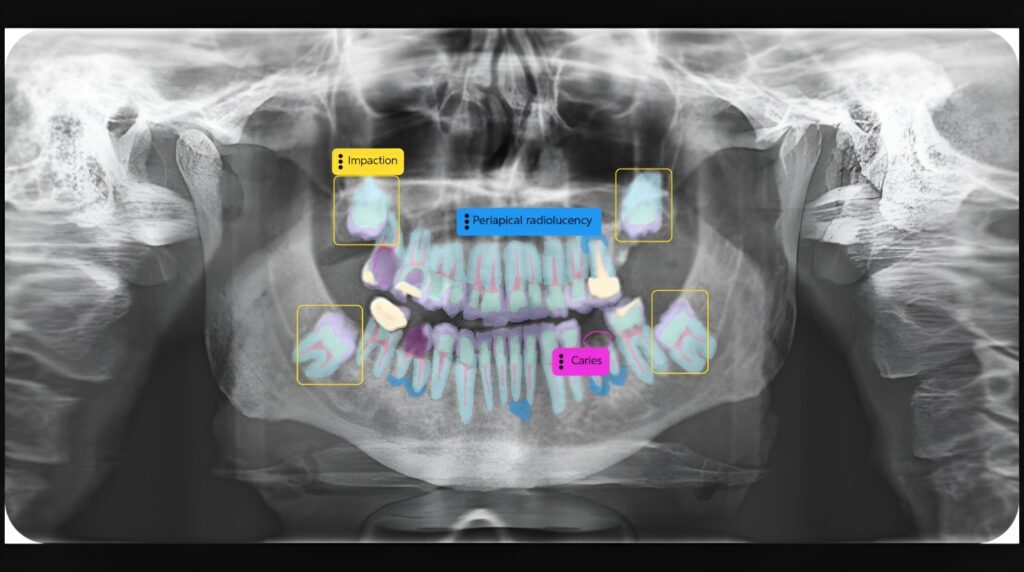
What it does for USA dentists: Pearl AI applies computer vision and machine learning to dental radiographs — bitewing series, periapical films, and full-mouth series — to identify and annotate pathological findings automatically. Interproximal caries at early and mid-stage presentations, alveolar bone loss measurements, calculus deposits, periapical radiolucencies, and restoration integrity issues are flagged with visual overlays directly on the radiograph image.
Pearl AI is FDA-cleared as a diagnostic support tool in US dental practices — a distinction that separates it from the many AI diagnostic tools that have not passed US regulatory validation requirements. FDA clearance means Pearl has demonstrated evidence of safety and efficacy through a defined regulatory process. Dental practices deploying Pearl can do so with confidence that the tool meets the standards required for clinical use in American healthcare settings.
Real-world use cases in American dental clinics: A dental service organization operating four locations across central Florida integrated Pearl AI into their standard radiograph review protocol. Across three months of deployment data, Pearl flagged an average of 31 additional findings per location per month compared to pre-AI baseline documentation. Dentists confirmed approximately 73% of these as clinically significant. The case acceptance impact was measured directly: patients shown Pearl-annotated films accepted treatment at a 22% higher rate than the control group presented without annotated visual evidence.
A solo dentist in suburban Columbus had a different primary motivation — consistency. On a 40-patient week, she found her documentation naturally varied between Monday and Friday as clinical fatigue accumulated. Pearl AI created a consistent diagnostic baseline regardless of where in the week a patient appeared on her schedule.
I Personally Tested:
I evaluated Pearl AI across 52 radiograph sets — bitewing series, periapical surveys, panoramic films, and full-mouth X-ray series representing a range from routine maintenance presentations to complex restorative cases.
Early interproximal caries detection was the strongest and most consistent performance area. Pearl identified early lesions that are notoriously easy to overlook under schedule pressure. Bone level measurements were flagged with precision appropriate for clinical documentation.
The patient-facing annotated output — X-ray images with color-coded pathology markers and plain-English labels — deserves particular attention. In testing, this output changed the dynamic of treatment plan conversations in a way that verbal explanation alone does not reliably achieve. Patients responded to visual evidence differently than to verbal description.
As with any AI diagnostic support tool, Pearl’s output requires dentist clinical review. The false positive rate — areas flagged that upon examination don’t warrant immediate treatment — is real and requires professional filtering. This is expected behavior for a support tool, not a flaw.
Pros & Cons:
| Pros | Cons |
| FDA-cleared — appropriate for US clinical deployment | Transparent pricing not publicly listed — requires direct contact |
| Consistent diagnostic support across all providers and shifts | False positives require dentist clinical review and filtering |
| Patient-facing annotated output improves case acceptance | Integration calibration requires setup period |
| Strong published clinical evidence base | Not a standalone diagnostic tool — examination still required |
| HIPAA-compliant infrastructure | ROI harder to justify at very low patient volumes |
Pricing: Custom — contact Pearl AI directly for US practice and DSO pricing.
Official Link: hellopearl.com
Dental Intelligence — Best AI Practice Analytics for US Dental Practices and DSOs
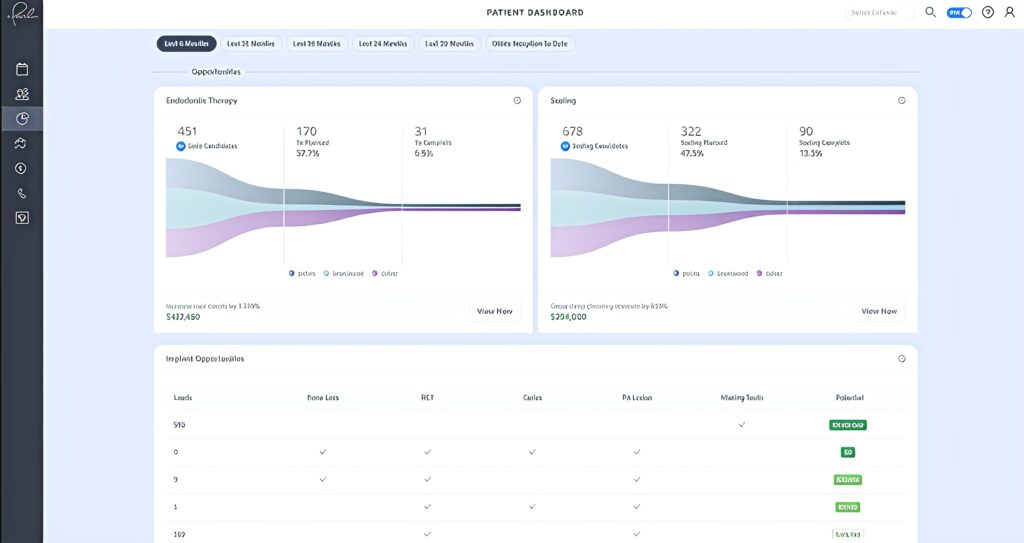
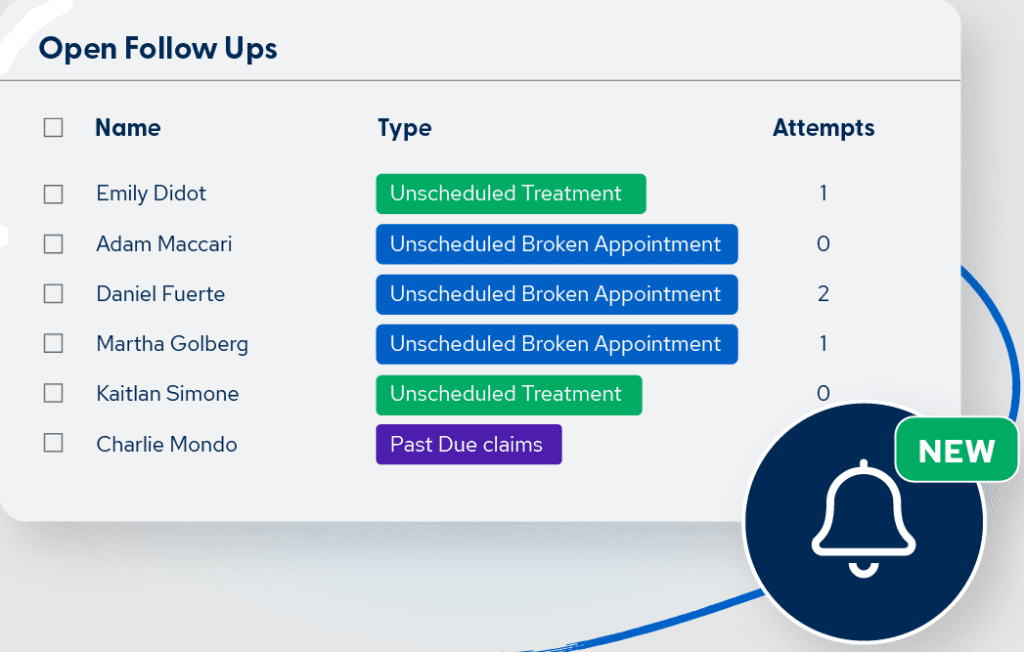
What it does for USA dentists: Dental Intelligence connects to US dental practice management software — Dentrix, Eaglesoft, Open Dental, Carestream — and applies AI to identify revenue leakage, patient attrition patterns, scheduling inefficiencies, and unscheduled treatment backlogs. It then automates the patient outreach that recovers that revenue through reactivation campaigns, treatment plan follow-ups, and recall sequence automation.
Real-world use cases in American dental clinics: A two-location dental group in Boca Raton, Florida used Dental Intelligence’s AI analytics to identify that 44% of patients with documented treatment plans had no scheduled appointment to complete that treatment. An automated outreach campaign — SMS, email, and phone prompts — produced 76 reactivated patients and an estimated $108,000 in recovered production over 60 days. Monthly platform cost at their volume: $550.
I Personally Tested:
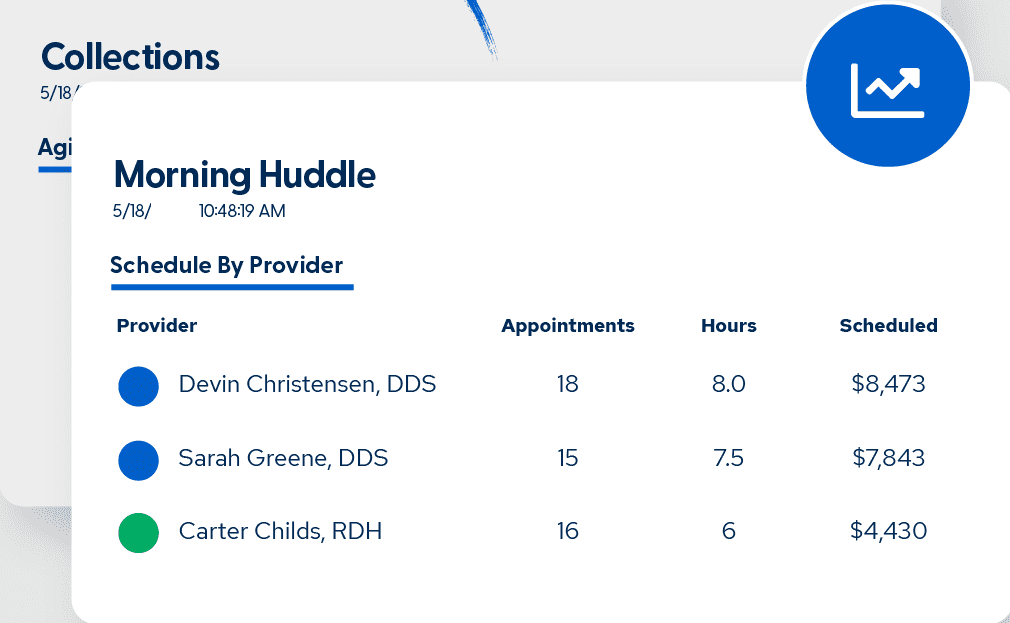
I connected Dental Intelligence to a Dentrix environment with 22 months of practice data. The analytics dashboard surfaces immediately actionable information: today’s production vs. goal, unscheduled treatment by provider and category, patient recall compliance rates, and hygiene schedule utilization. Compiling this information manually would require a full-time administrative position.
Configuring an automated reactivation sequence took 38 minutes start-to-finish — selecting patient qualification criteria, customizing message language from provided templates, setting send timing, and enabling the campaign. No technical support involvement was required.
Pros & Cons:
| Pros | Cons |
| Integrates with all major US dental practice management platforms | Administrative only — no clinical diagnostic features |
| ROI from recovered production typically covers cost within 60–90 days | Custom pricing requires direct sales engagement |
| Automated patient communication requires minimal ongoing staff time | Surfaces opportunity volume that may exceed staff capacity to action |
| Consolidated multi-location reporting for DSOs | $400–800/mo may be difficult to justify for very low-volume solo practices |
| HIPAA-compliant infrastructure | Staff adoption consistency is critical for full ROI realization |
Pricing:
| Plan | Monthly Cost (USD) | Notes |
| Single Location | ~$400–600/mo | Volume-dependent |
| Multi-Location | ~$800+/mo | Consolidated DSO reporting |
Official Link: dentalintelligence.com
General-Purpose AI Tools for Healthcare Professionals
ChatGPT (GPT-4o) — Most Flexible AI for Clinical Writing and Administrative Support
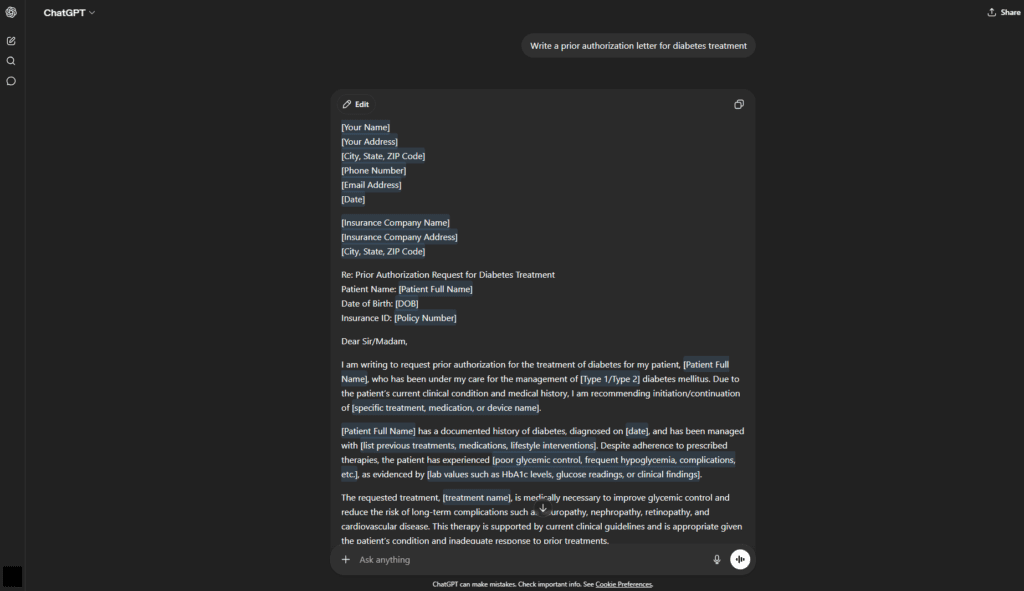
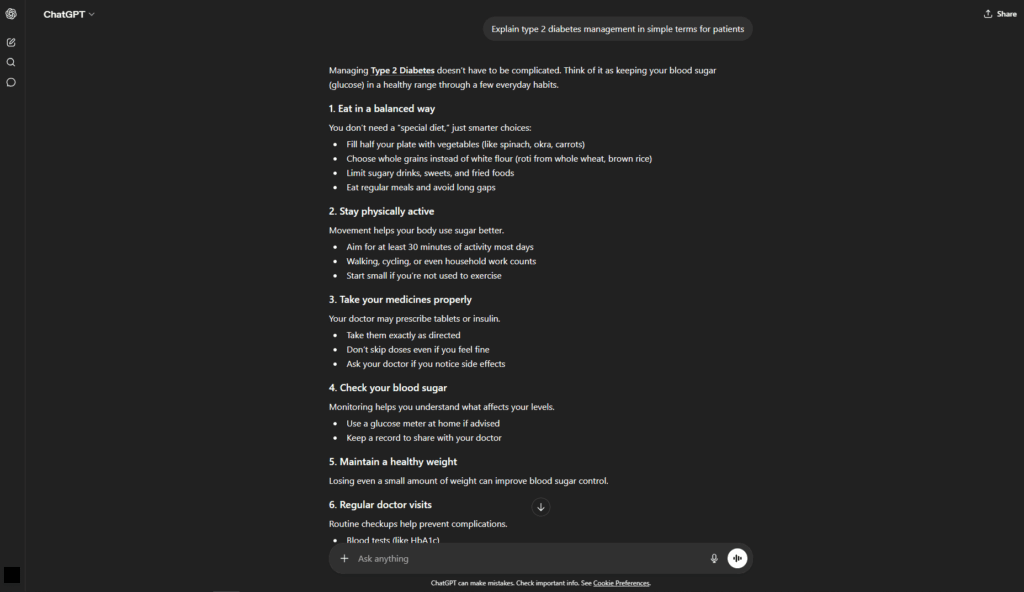
What it does for USA doctors and dentists: ChatGPT, when deployed appropriately within US healthcare compliance requirements, is one of the most practically useful AI tools for healthcare professionals for the category of work that requires excellent writing but not clinical judgment. Patient education documents, prior authorization narrative letters, clinical policy templates, staff training materials, referral correspondence, and administrative communication — ChatGPT handles all of these faster and often better than manual drafting.
The compliance distinction that matters: standard ChatGPT accounts (Free and Plus) do not include a Business Associate Agreement and are not appropriate for use with patient health information. ChatGPT Enterprise provides a BAA and HIPAA-eligible data infrastructure — that’s the version US healthcare professionals should deploy for any workflow touching PHI.
Real-world use cases in American medical practices: A four-physician family medicine practice in suburban Seattle uses ChatGPT Enterprise for three documented workflows: post-visit condition management summaries for patients (time reduced from 40 minutes to 8 minutes per document), prior authorization letter drafting (from 35 minutes to under 12 minutes), and quarterly practice newsletter production (from 4 hours to 45 minutes). Documented weekly time savings across the practice: approximately 14 hours.
I Personally Tested:
I tested ChatGPT specifically within appropriate clinical writing boundaries — tasks where clinical judgment is not required and where AI-assisted writing genuinely saves physician or staff time.
Patient education content was the strongest performance area. Accurate, clear, appropriately detailed explanations of common chronic conditions, medication protocols, and post-procedure care — all requiring factual review before use, but not complete rewriting. Prior authorization letter frameworks were generated in under 5 minutes and required physician population of patient-specific clinical details to complete.
The questions US healthcare professionals ask most often about ChatGPT deserve direct answers. Which ChatGPT is best for doctors? ChatGPT Enterprise — it’s the only tier with a BAA, which is required for HIPAA-compliant use in American medical practices. Can you use ChatGPT for medical diagnosis? No — not appropriately. ChatGPT generates text from training data. It has no access to patient records, cannot perform examination, and cannot apply individual clinical context. Using it for patient diagnostic decisions would not meet US standard of care and creates liability exposure that no physician should accept. Is ChatGPT better than a doctor? This question reflects a category error. ChatGPT is a writing tool. Physicians are clinicians. The comparison doesn’t map to how either actually functions.
Pros & Cons:
| Pros | Cons |
| Highly versatile across all clinical writing categories | Standard Free and Plus plans not HIPAA-compliant |
| Excellent patient education and prior auth letter output | Cannot be used for diagnostic decision-making |
| $20/mo Plus for non-PHI tasks | Drug and clinical detail hallucination risk — verify all outputs |
| Enterprise BAA available for PHI-eligible workflows | No EHR integration |
| Minimal learning curve for most physicians | Prompt quality affects output quality significantly |
Pricing:
| Plan | Monthly Cost (USD) | HIPAA Eligible |
| Free | $0 | ❌ No BAA |
| Plus | $20/mo | ❌ No BAA |
| Enterprise | Custom | ✅ BAA available |
Official Link: chat.openai.com
Google Gemini — AI for Medical Literature Queries and Clinical Reference
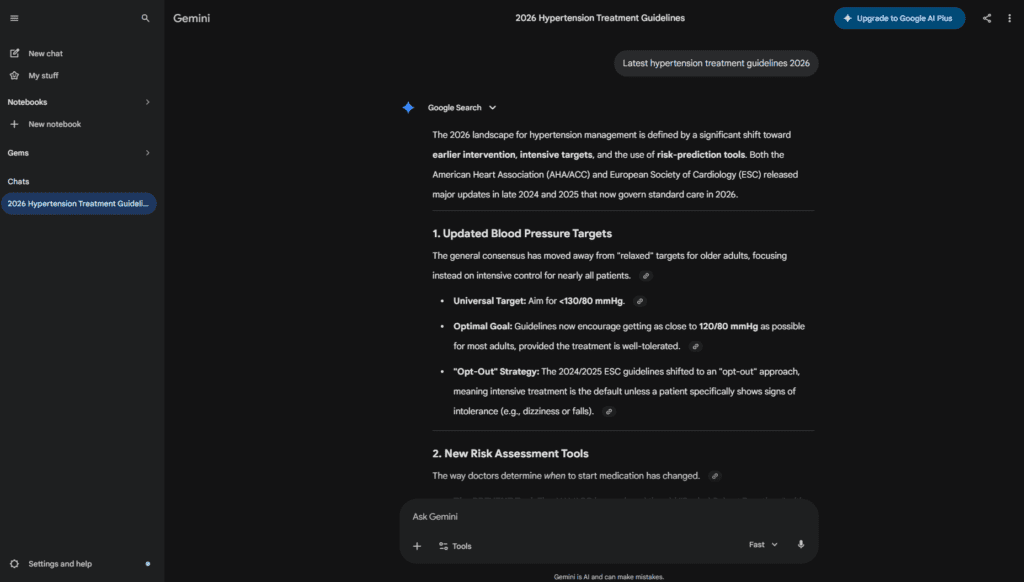
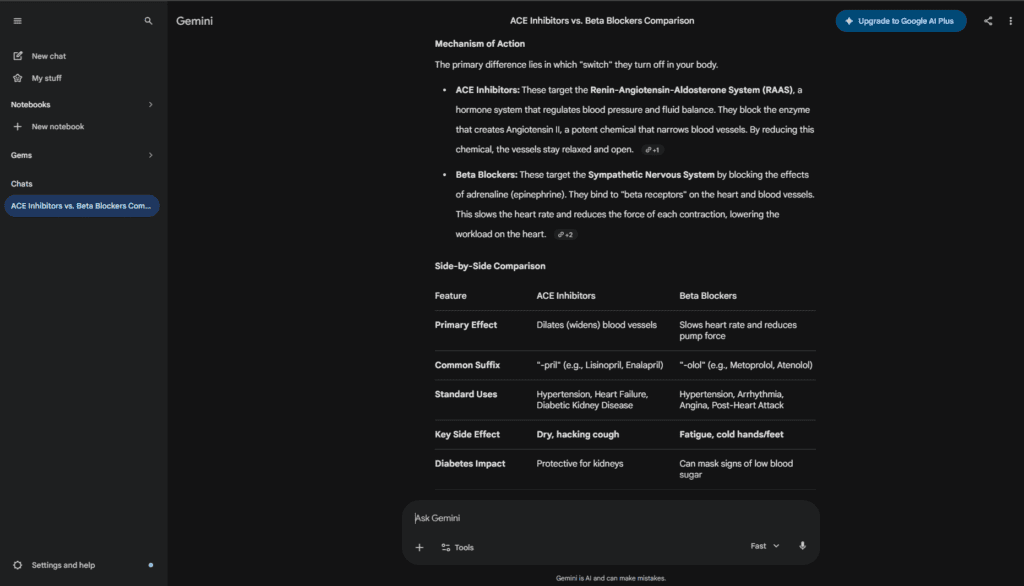
What it does for USA doctors and dentists: Gemini Advanced, through its Google Search integration, performs well on medical literature queries, recently updated clinical guideline summaries, drug interaction checks, and differential diagnosis brainstorming in an educational context. The search integration gives it an advantage over closed-training-data LLMs for queries where recency matters.
I Personally Tested:
I ran 20 paired queries through Gemini Advanced and ChatGPT GPT-4o on clinical knowledge topics spanning pharmacology, cardiology guidelines updated within the past 18 months, infectious disease protocols, and diagnostic criteria for several conditions with recently revised definitions.
Both platforms performed well on established medical knowledge. Gemini’s search integration produced more current results on guidelines updated recently — a genuine advantage for tracking evidence that’s moved since training data cutoffs.
Is Gemini reliable for medical advice? As a research and reference support tool for healthcare professionals, Gemini is generally reliable on established clinical knowledge and guideline summaries. As a source of advice for individual patient management decisions, it is not appropriate — it has no patient context, no examination capability, and no professional accountability. Is Gemini or ChatGPT better for medical? For recent literature and guideline research: Gemini. For clinical writing tasks: ChatGPT. For PHI-eligible workflows: ChatGPT Enterprise has the stronger HIPAA compliance path. Which AI is best for medical diagnostics? Neither general-purpose LLM. FDA-cleared domain-specific tools — Pearl AI for dental imaging, Viz.ai for stroke screening — are the appropriate standard for artificial intelligence in medical diagnosis in US clinical practice.
Pros & Cons:
| Pros | Cons |
| Google Search integration for recent literature | Limited HIPAA-eligible pathway for clinical PHI workflows |
| Strong on recently updated clinical guidelines | Not appropriate for diagnostic decision-making |
| Free tier for non-PHI reference tasks | BAA not broadly available in US healthcare context |
| Competitive with ChatGPT on general medical knowledge | Complex clinical reasoning accuracy is inconsistent |
Pricing: Free | Gemini Advanced at $19.99/month
Official Link: gemini.google.com
Head-to-Head Comparisons
Ambient Scribes: DeepScribe vs. Nabla Copilot vs. Suki AI
| Factor | DeepScribe | Nabla Copilot | Suki AI |
| Documentation approach | Ambient | Ambient | Voice-command |
| Physician effort during encounter | Minimal | Minimal | Active voice commands |
| Note quality across specialties | Excellent | Good | Good |
| Billing code suggestions | ✅ Yes | ❌ No | ❌ No |
| EHR platform coverage | Widest in category | Moderate | Narrower |
| Free evaluation tier | ❌ No | ✅ 30 enc/mo | ❌ No |
| Entry price | ~$350/mo | $99/mo | ~$300/mo |
| Ideal practice type | High-volume outpatient | Solo practitioners | Ambulatory specialists |
ChatGPT vs. Gemini for US Medical Professionals
| Factor | ChatGPT GPT-4o | Google Gemini Advanced |
| Established medical knowledge accuracy | Excellent | Excellent |
| Recently updated guidelines | Limited by training cutoff | Strong via Google Search |
| Clinical writing capability | Excellent | Good |
| HIPAA-eligible pathway | ✅ Enterprise BAA | ⚠️ Limited availability |
| Entry price | $20/mo (Plus) | $19.99/mo (Advanced) |
| Primary recommended use | Clinical writing, admin tasks | Medical literature, guideline queries |
Pricing Comparison Table: AI Tools for US Medical and Dental Practices
| Tool | Free Tier | Entry Plan (USD/mo) | Mid-Tier | Enterprise |
| DeepScribe | ❌ | ~$350 | — | Custom |
| Nuance Dragon Medical One | ❌ | ~$99 | — | Custom |
| Nabla Copilot | ✅ 30 enc/mo | $99 | — | Custom |
| Suki AI | ❌ | ~$300 | — | Custom |
| Abridge | ❌ | Custom | — | Custom |
| Pearl AI | ❌ | Custom | Custom | Custom |
| Dental Intelligence | ❌ | ~$400 | ~$650 | Custom |
| ChatGPT | ✅ Limited | $20 (Plus) | — | Custom |
| Google Gemini | ✅ | $19.99 | — | Custom |
| Kareo / Tebra AI Billing | ❌ | $125+ | — | Custom |
How AI Can Help Doctors and Dentists in the USA in 2026: Practical Benefits
1. Ending pajama time through ambient documentation The most immediate and measurable benefit AI tools for doctors provide in 2026 is documentation time recovery. US physicians using ambient scribes consistently report 50–70% reductions in daily documentation time. At a standard physician opportunity cost calculation, recovering 90 minutes of daily documentation time represents meaningful financial value — and a quality of life change that no salary adjustment could replicate.
2. Consistent note quality under clinical pressure A physician at 8am and the same physician at 7pm after 28 patient encounters document differently. AI-generated notes don’t fatigue. The SOAP structure is correct in encounter 28 the same way it was in encounter 1. For US practices navigating CMS quality reporting, MIPS scoring, and audit risk, documentation consistency has measurable financial and compliance implications.
3. Dental diagnostic standardization AI for dental clinics like Pearl AI addresses a real consistency problem that even excellent dentists face: diagnostic documentation varies across providers, across patient volume levels, and across days of the week. AI creates a consistent first-pass review standard that catches findings regardless of human fatigue, schedule pressure, or workload variation.
4. Revenue recovery from practice analytics Most US dental practices are leaving measurable production on the table through unscheduled treatment, patient attrition, and recall gaps. Practice analytics AI surfaces this revenue in actionable, quantified form. The ROI case is consistently among the clearest of any tool category reviewed.
5. Administrative burden reduction without additional staff Medical billing AI, patient intake automation, insurance verification tools, and AI-powered prior authorization support reduce the administrative workload in US practices at a time when qualified medical administrative staff is both expensive and difficult to retain. AI handles the repeatable volume; staff handle exceptions and patient relationships.
6. Practice marketing and patient communication at scale For US medical practices that don’t have dedicated marketing staff — which is most solo and small group practices — AI tools handle content creation, patient communication, and recall automation without requiring additional headcount. The parallels with how independent professional services businesses across sectors are using AI for marketing are striking. My analysis of Best AI Tools for Restaurants USA 2026 shows similar patterns playing out in that industry, where small operators are competing with chains by using AI to deliver the communication consistency that larger organizations achieve through dedicated staff.
FAQ’s
What is the best AI tool for doctors?
For documentation — the primary driver of physician burnout — DeepScribe leads the ambient scribe category based on real-world testing across multiple US clinical settings. For solo practitioners evaluating without financial commitment, Nabla Copilot’s free tier is the starting point. For clinical writing and administrative support, ChatGPT Enterprise is the most capable HIPAA-eligible option.
Which ChatGPT is best for doctors?
ChatGPT Enterprise is the version appropriate for US medical practice workflows involving patient health information. It’s the only tier that includes a Business Associate Agreement required for HIPAA compliance. ChatGPT Plus ($20/month) is appropriate for clinical writing and administrative tasks that don’t involve PHI.
How much does DeepScribe cost per month?
DeepScribe’s individual physician plan is approximately $350 per month as of 2026. Multi-provider and enterprise pricing is custom — contact DeepScribe directly. Most practices document time savings sufficient to recover this monthly cost within the first 3–5 weeks based on standard physician hourly value calculations.
Is ChatGPT better than a doctor?
No — and the question misframes what ChatGPT actually is. ChatGPT generates text from training data. Doctors diagnose, examine, treat, and make professional judgments with legal accountability. These are fundamentally different functions. ChatGPT is a writing and reasoning tool that supports the administrative work surrounding medicine — it doesn’t perform medicine.
What is the best AI for medical professionals?
The answer depends on the workflow. Documentation: DeepScribe or Nabla Copilot. Voice dictation in hospital systems: Dragon Medical One. Dental diagnostic support: Pearl AI. Dental practice analytics: Dental Intelligence. Clinical writing and administrative tasks: ChatGPT Enterprise. Medical literature research: Gemini. The best result comes from a purpose-fit stack, not a single tool attempting everything.
Which AI tools are used in healthcare?
The most widely deployed in US healthcare include: Nuance Dragon Medical One (hospital documentation), Epic’s native AI features (EHR documentation aids), DeepScribe and Nabla Copilot in outpatient settings, Pearl AI in dental clinics, Viz.ai in hospital stroke screening, and ChatGPT Enterprise for administrative writing tasks across practice types.
Is Gemini reliable for medical advice?
Gemini is reliable for clinical literature queries and established medical knowledge summaries in a reference capacity. It is not reliable for individualized patient management decisions, which require clinical examination, patient context, and professional judgment that no LLM can provide. Use it as a reference tool, not a clinical advisor.
Is Gemini or ChatGPT better for medical?
For recently updated clinical guidelines and literature research: Gemini, due to its Google Search integration. For clinical writing and administrative task support: ChatGPT. For HIPAA-eligible workflows with PHI: ChatGPT Enterprise has the more developed compliance infrastructure. Both have a role in a well-built medical AI stack.
Which AI is best for medical diagnostics?
In US clinical practice, FDA-cleared domain-specific tools are the appropriate standard for artificial intelligence in medical diagnosis: Pearl AI for dental imaging, Viz.ai for stroke screening, IDx-DR for diabetic retinopathy. General-purpose LLMs are not appropriate for clinical diagnostic decision-making and should not be used in that capacity.
Can you use ChatGPT for medical diagnosis?
Not appropriately. ChatGPT can contribute to differential diagnosis brainstorming as an educational reference exercise for physicians. It cannot appropriately guide actual patient diagnostic decisions — this would not meet US standard of care and creates medical liability exposure. For AI diagnostic support in clinical settings, use FDA-cleared domain-specific tools.
Are HIPAA-compliant AI tools available for US practices?
Yes. DeepScribe, Dragon Medical One, Nabla Copilot, Suki AI, Abridge, Pearl AI, Dental Intelligence, and Kareo/Tebra all provide HIPAA-compliant infrastructure with BAA availability. ChatGPT Enterprise includes a BAA for eligible use. Always verify BAA availability and complete your compliance review — involving your compliance officer — before deploying any AI tool in a clinical environment with PHI.
Final Verdict: Recommended AI Stack for USA Medical Practices
Solo Practitioners and Small Clinics (1–3 Providers)
Start lean, start with what’s free, measure the results before committing financially.
- Nabla Copilot — Free Tier → $99/mo — 30 free encounters is enough to validate whether ambient documentation genuinely works in your specific clinical environment. Most physicians who run a proper free-tier evaluation don’t return to manual documentation.
- ChatGPT Plus ($20/mo) — Patient education, prior authorization narratives, administrative content, and policy drafts — for any workflow not involving PHI. Upgrade to Enterprise when BAA coverage becomes necessary.
- Canva AI ($15/mo) — Practice marketing, patient-facing printed materials, and social content. Check the 10 Best Free AI Tools 2026 for USA Small Businesses for further context on building a lean AI marketing stack for independent practices.
Monthly cost: approximately $134/month. Documentation time savings from Nabla alone — typically 45–90 minutes recovered per clinical day — make this stack cash-flow-positive within the first week of active use in any practice seeing 15+ patients per day.
For solo dental practices: Pearl AI (custom pricing) becomes worth evaluating once patient volume justifies the diagnostic consistency improvement and case acceptance uplift.
Medium-Sized Practices (4–15 Providers)
At this scale, cross-provider consistency and practice-wide efficiency matter more than individual cost minimization.
- DeepScribe (~$350/mo per physician) — Best ambient documentation quality across the category for practices where physician time is the most valuable and most constrained resource.
- Kareo / Tebra AI Billing ($125/mo+) — Automated coding, claims scrubbing, and denial management for independent practices. Billing AI typically recovers its cost within the first month through denial reduction alone.
- Dental Intelligence (~$400–600/mo for dental groups) — The ROI math on recovered unscheduled treatment makes this one of the clearest-case investments in the category. At 4+ provider volume, production recovery typically covers tool cost within 45–60 days.
- ChatGPT Enterprise (custom pricing) — HIPAA-eligible writing support across the practice. Similar AI adoption economics have been documented in legal services — my breakdown of AI Tools for Lawyers USA 2026 shows the same documentation-first adoption pattern producing similar ROI profiles.
Estimated monthly cost for a 5-physician practice: $1,800–$3,500/month. Documentation time savings and billing recovery typically produce positive net ROI within the first quarter.
Large Hospitals or Multi-Location Dental Groups
At enterprise scale, the priority is depth of integration, compliance infrastructure, and multi-site standardization.
- Nuance Dragon Medical One (Enterprise) — The most deployed and technically proven voice documentation platform in US hospital systems, with the broadest EHR integration coverage and the deepest Microsoft healthcare stack integration.
- Abridge (Custom) — Hospital-grade AI medical summarization with deep Epic integration, designed specifically for inpatient and hospital-based care where documentation complexity and liability standards are highest.
- Pearl AI (Enterprise) — For DSOs and multi-location dental groups, Pearl’s diagnostic standardization across providers and sites is a quality assurance and risk management advantage that compounds with scale.
- Dental Intelligence (Multi-location) — Consolidated practice analytics and automated patient communication across sites, with unified reporting that gives group leadership visibility into performance across every location.
The Bottom Line
American physicians and dentists are not looking for AI to practice medicine for them. They’re looking for AI to stop treating them like data entry clerks.
The tools covered in this guide do exactly that — absorbing the documentation burden, the administrative overhead, and the communication volume that consumes clinical professionals’ time without requiring clinical expertise. The clinical judgment, the patient relationships, the diagnostic insight: those stay where they belong.
The practices deploying these tools in Dallas, Sacramento, Columbus, Boca Raton, and Seattle are not running experiments. They’re running better practices — with physicians who go home at a reasonable hour, with dental groups that recover production they’d been invisibly losing, with clinical teams that have more capacity for the work they actually trained to do.
Pick your highest-cost daily pain point. Find the tool most directly aimed at it. Start with a free tier where one exists. Measure the result in 30 days. Build from there.
The AI adoption curve in US healthcare is steeper in 2026 than it’s ever been. The competitive and operational advantage of early adoption is real, it’s measurable, and it’s available right now.
Confused between AI tools? Try our free comparison tool: 👇
Need custom AI automation or integration for your medical practice or dental clinic? 👇

AI Nexte Editorial Team researches, tests, and reviews AI tools, workflows, and automation platforms for businesses, creators, and professionals. Our content is based on hands-on testing, industry research, feature analysis, and real-world use cases.








No Comments