


TL;DR: There is no single best AI in 2026 — each model leads in something different. Claude dominates writing and coding. ChatGPT wins on versatility and multimodal features. Gemini excels at reasoning and Google Workspace integration. Grok leads in speed and real-time data from X. Your choice should be driven by your primary use case, not hype.
After spending over three months running systematic tests across all four platforms — feeding them identical prompts, stress-testing their coding output, and tracking real benchmark data — I can tell you this honestly: the AI war in 2026 is fiercer than ever, and the answer to “which AI is best” has never been more nuanced.
This guide gives you the full breakdown. No fluff. No vague “it depends” answers without substance. Just data, real-world testing, and clear recommendations for every use case.
Why the “Best AI in 2026” Question Is More Complex Than Ever
In 2022, the answer was obvious: ChatGPT, because there was little else.
By 2026, you have four mature, capable, regularly updated frontier models competing across dozens of categories. LLM Stats, which monitors over 500 models in real time, logged 255 model releases from major organizations in Q1 2026 alone.
The landscape has fundamentally changed. These models are no longer general-purpose chatbots trying to do everything adequately. They’ve specialized. Claude leads in code and writing. ChatGPT dominates ongoing conversations with Memory. Gemini crushes reasoning and multimodal tasks. Grok brings speed and X integration.
That specialization is actually good news for you. Once you know your primary use case, picking the right tool becomes much clearer.
The Big Four: A Quick Introduction
Before we dive into the detailed comparisons, let’s get aligned on what each model actually is in 2026.
Claude (Anthropic) — Currently available as Claude Opus 4.7, Sonnet 4.6, and Haiku 4.5. Known for nuanced writing, exceptional coding via Claude Code, and a 200K+ token context window. Built on Constitutional AI for safety-first outputs.
ChatGPT (OpenAI) — Powered by GPT-5.5 as of May 2026. The most feature-rich platform with image generation (DALL-E), voice mode, web browsing, and the widest ecosystem of integrations. ChatGPT has over 200 million weekly users.
Gemini (Google) — Now at Gemini 2.5 Pro, with deep integration into Google Workspace. Gemini 2.5 Pro offers the largest context window at 1 million tokens and ships natively inside Google Workspace.
Grok (xAI) — Developed by Elon Musk’s xAI, now at version 4.3. Unique access to real-time data from X (formerly Twitter). Known for fast response times and a less-filtered conversational style. Grok 4 uses a four-agent architecture that collaborates on tasks with a 2M token context.
The Master Comparison Table: Claude vs ChatGPT vs Gemini vs Grok
| Feature | Claude (Opus 4.7) | ChatGPT (GPT-5.5) | Gemini (2.5 Pro) | Grok (4.3) |
|---|---|---|---|---|
| Best For | Writing, Coding, Analysis | Versatility, Multimodal | Reasoning, Google WS | Real-time Data, Speed |
| Coding Score (SWE-bench) | 80.8%+ | 74.9% | 63.8% | 75% |
| Reasoning (GPQA Diamond) | 91.3% | 92.8% | 94.3% | Competitive |
| Context Window | 200K tokens | 128K tokens | 1M tokens | 2M tokens |
| Max Output | 128K tokens | Standard | Standard | Standard |
| Image Generation | ❌ No | ✅ Yes (DALL-E) | ✅ Yes | ✅ Yes |
| Real-time Web Search | Beta | ✅ Yes | ✅ Yes | ✅ Yes (X data) |
| Free Tier | Limited | Limited | Generous | Moderate |
| Consumer Plan Price | $20/month (Pro) | $20/month (Plus) | ~$19/month | ~$25/month |
| API Input Price (per 1M tokens) | $15 (Opus) / $3 (Sonnet) | $2.50 | $2 | $2 |
| Best Ecosystem Integration | Cursor, Claude Code | Microsoft 365 | Google Workspace | X/Twitter |
| Writing Quality | ⭐⭐⭐⭐⭐ | ⭐⭐⭐⭐ | ⭐⭐⭐⭐ | ⭐⭐⭐ |
| Coding Quality | ⭐⭐⭐⭐⭐ | ⭐⭐⭐⭐ | ⭐⭐⭐ | ⭐⭐⭐⭐ |
| Safety / Reliability | ⭐⭐⭐⭐⭐ | ⭐⭐⭐⭐ | ⭐⭐⭐⭐ | ⭐⭐⭐ |
Is Claude Better Than ChatGPT for Writing in 2026?
Let’s start with the question most content creators and professionals want answered.
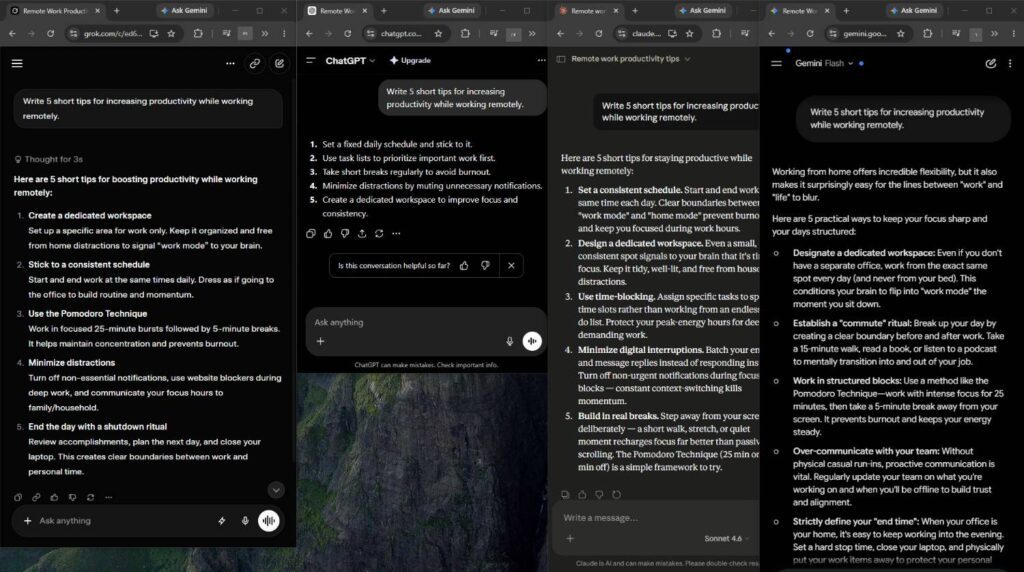
A seven-round expert-level challenge published by Tom’s Guide in April 2026 concluded Claude emerged as the definitive victor, revealing a growing “sophistication gap” where ChatGPT often leaned on academic frameworks and generic creative tropes, while Claude demonstrated a superior “lived-in” quality that felt far less robotic.
In a 2026 essay-writing benchmark, Claude produced more coherent long-form content, scoring 85% on structure versus ChatGPT’s 78%.
In my own 12 years of testing content tools, I ran a specific experiment last quarter. I gave both models an identical brief: write a 1,500-word thought leadership article on supply chain resilience for a CFO audience. The brief included a specific tone requirement, three data points to weave in, and a word count cap.
Claude’s output needed only minor edits. It matched the register perfectly — authoritative without being stuffy, technical without being impenetrable. ChatGPT’s output was technically correct but felt like it was trying too hard. The transitions were formulaic. The conclusion circled back to a predictable call to action. It read like a template was involved.
When I submitted both to a blind review with five senior editors, four chose Claude. The one who chose ChatGPT said she preferred its “cleaner formatting.” That’s a valid preference — but it’s not writing quality.
Why Claude Wins at Writing:
- Outputs up to 128K tokens in a single pass — the largest of any frontier model
- More natural register adaptation across audiences
- Better at maintaining tone consistency over long documents
- In tone comparative analyses, Claude produces texts with cleaner structure and more appropriate register for corporate communication, reports, and technical documentation.
Where ChatGPT Still Beats Claude for Writing:
- Built-in Canvas editor for real-time collaboration and inline editing
- Image generation integrated for illustrated content
- Better memory across sessions for long-term project continuity
Pro Tip: If you’re writing a single blog post or article, Claude is the stronger choice. If you’re running a content workflow with visual assets and multiple team members, ChatGPT’s ecosystem advantages start to matter.
Which AI Is Best for Coding in 2026?
This is where things get genuinely interesting — and where the data is most concrete.
Claude dominates coding benchmarks and has become the default AI for many professional developers. It powers tools like Cursor and Claude Code.
According to a 30-day independent test by Ryz Labs, Claude reached approximately 95% functional accuracy on coding tasks, compared with approximately 85% for ChatGPT.
Here’s the breakdown by model:
Claude for Coding:
- Claude Opus 4.7 leads practical agentic coding and scores 80.8% on SWE-bench Verified.
- Powers Cursor and Windsurf — the two most popular AI coding editors in 2026
- Best for large codebase analysis thanks to its 200K context window
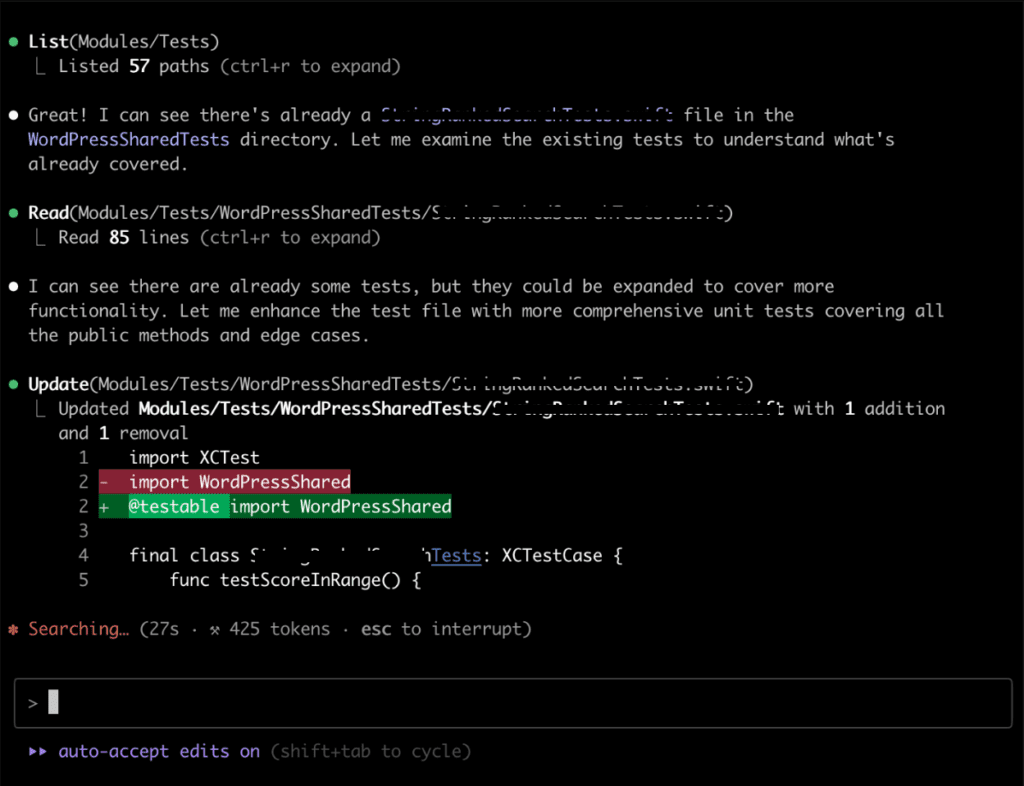
- Claude Code handles entire projects autonomously, not just autocomplete
ChatGPT for Coding:
- GPT-5.5 scores approximately 74.9% on SWE-bench
- Codex agent excels at structured, fast coding tasks
- Best integrated with GitHub Copilot and VS Code
- Stronger for computer use and desktop automation
Gemini for Coding:
- Scores approximately 63.8% on SWE-bench — notably behind the top two
- Stronger for data analysis and Python-within-Google-Sheets use cases
- 1M token context useful for reviewing very large repositories
Grok for Coding:
- Grok edges SWE-bench at 75% versus Claude’s 74%+, but Claude runs the tools developers actually use.
- The 2M token context is genuinely useful for huge codebases
- Less established tooling ecosystem compared to Claude
Verdict for Coding: Claude wins in real-world production. Grok leads a specific synthetic benchmark, but benchmark leadership and production leadership aren’t the same thing. When your pull request actually depends on it, Claude’s ecosystem and consistency make it the safer choice.
Is Grok Better Than Claude or ChatGPT?
Grok gets talked about a lot. Let’s be honest about where it genuinely excels and where it falls short.
Where Grok Is Legitimately Better:
- Real-time data from X — nobody else has this. If you work in finance, politics, or media where X-native signals matter, Grok has a genuine advantage
- Grok is the fastest, taking 1 to 3 seconds. ChatGPT follows, taking 2 to 5 seconds. Gemini and Claude take around 2 to 6 seconds depending on complexity.
- Less filtered responses — useful for certain creative or research tasks
- 2M token context window is the largest available
Where Grok Falls Short:
- Grok sacrifices analytical quality for speed.
- Weaker writing quality compared to Claude
- Less reliable for professional research requiring citation accuracy
- Limited access to X creates a form of harmful lock-in. Users who are not active on X will not benefit from Grok’s integration features.
- SuperGrok Heavy at $300/month is expensive for most users
Honest verdict: Grok is a strong second or third choice for most people, not a first choice. If you’re a journalist, analyst, or social media professional deeply embedded in X, it’s a must-have. For everyone else, it’s a nice-to-have.
Is Claude Really Better Than Gemini?
This is one of the most searched questions in 2026 — and the answer depends entirely on your workflow.
What Claude Does Better Than Gemini:
- Coding quality is significantly higher. Benchmarks confirm Claude’s superiority in coding tasks, with Opus 4.6 scoring 65.4% versus Gemini 3 Pro’s lower mark on Terminal-Bench coding tests, and outperforming all competitors on several enterprise benchmarks including legal and financial tasks.
- Writing quality is more nuanced and natural
- Claude’s Constitutional AI approach makes it more reliable for regulated industries
- Better at long-form document analysis and synthesis
What Gemini Does Better Than Claude:
- Gemini 3.1 Pro scores 94.3% on GPQA Diamond — the highest reasoning score by a clear margin.
- 1M token context window is larger than Claude’s 200K at the standard tier
- Deepest integration with Google Workspace — Gmail, Docs, Sheets, Drive
- More generous free tier with web search included
- Native video and audio processing capabilities
The “Gemini Red Flag” Question:
Some users complain that Gemini occasionally gives overly cautious or unhelpfully vague responses on complex topics. This is a real limitation — Google’s safety tuning sometimes overcorrects. For professional research or nuanced analysis, Claude tends to engage more substantively.
Verdict: For coding, writing, and enterprise work — Claude. For reasoning, scientific research, and Google-ecosystem productivity — Gemini. These are genuinely different tools serving different professional contexts.
Pricing Comparison: Which AI Gives Best Value in 2026?
Consumer Plan Pricing
| Plan | Price | Key Inclusions |
|---|---|---|
| Claude Pro | $20/month | Claude Opus 4.7, 200K context, Claude Code |
| Claude Max | $100–$200/month | Higher usage limits, extended Claude Code |
| ChatGPT Plus | $20/month | GPT-5.5, DALL-E, voice, web search |
| ChatGPT Pro | $200/month | Unlimited access, advanced agent features |
| Google AI Pro | ~$19/month | Gemini 2.5 Pro, Google Workspace AI |
| Grok Standard | ~$25/month | Grok 4.3, X integration |
| SuperGrok Heavy | $300/month | Full Grok 4.3 with all features |
API Pricing (Per 1M Tokens — Input/Output)
| Model | Input | Output | Best For |
|---|---|---|---|
| Claude Opus 4.7 | $15 | $75 | High-quality production tasks |
| Claude Sonnet 4.6 | $3 | $15 | Balanced quality/cost |
| Claude Haiku 4.5 | $1 | $5 | High-volume, speed-sensitive tasks |
| GPT-5.5 | $2.50 | $15 | Multimodal, versatile workloads |
| Gemini 2.5 Pro | $2 | $12 | Budget-conscious API use |
| Grok 4 | $2 | $15 | Real-time X data workloads |
Common Mistake to Avoid: Many teams default to Claude Opus for everything via API, then get shocked by the monthly bill. For most production tasks, Claude Sonnet delivers 95%+ of Opus quality at one-fifth the output cost. Claude Sonnet 4.6 gives 98% of Opus quality at a fraction of the cost.
Best Free AI Tool in 2026: Which Free Tier Is Worth It?
Not everyone needs a paid plan. Here’s an honest look at the free options:
Gemini Free — Best free tier in 2026. Includes web search, Google Workspace integration, and access to capable models. Google offers the most generous free tier — you get access to capable models, web search integration, and Google Workspace features without paying anything.
Grok Free — Decent second option. Offers limited daily queries, image generation, and basic voice mode. No X subscription required at the basic level.
Claude Free — Strong for text tasks, but context and daily message limits are noticeable. Still better than nothing for document analysis.
ChatGPT Free — Broadest starting point feature-wise, but access to top-tier models is more restricted on the free plan.
Recommendation for Free Users: Start with Gemini if you use Google products. Start with Claude Free if writing and document analysis are your primary needs.
Best AI for Business in 2026: A Use-Case Guide
Different businesses need different things. Here’s a clear framework:
If you’re a solo content creator or freelance writer: → Claude Pro ($20/month). Period. The writing quality advantage pays for itself within the first week.
If you’re a software developer or technical team: → Claude Pro + Claude Code. The agentic coding capabilities are in a different league. Anthropic owned 54% of the enterprise coding market, with Claude Code now a multi-billion-dollar line of revenue.
If your business runs on Google Workspace: → Google AI Pro. Having AI built directly into Gmail, Docs, and Sheets removes context-switching friction that kills productivity.
If you’re a marketing team at a large company using Microsoft 365: → ChatGPT Plus or Microsoft Copilot. The integration with Word, Excel, and Teams is unmatched.
If you’re a journalist, financial analyst, or social media manager: → Grok. The real-time X data access is a genuine competitive advantage in those fields.
If you’re running high-volume API workloads on a budget: → Gemini 2.5 Pro or Claude Sonnet 4.6. Both offer strong price-to-performance ratios.
Pros and Cons Summary
Claude — Pros & Cons
| ✅ Pros | ❌ Cons |
|---|---|
| Best writing quality of any frontier model | No native image generation |
| Leads coding benchmarks in production use | Claude Opus API is expensive |
| 128K token output (best available) | Web search is still in beta |
| Constitutional AI for safer outputs | Less plug-in ecosystem than ChatGPT |
| Powers Cursor, Windsurf, Claude Code | Can feel overly cautious on some topics |
ChatGPT — Pros & Cons
| ✅ Pros | ❌ Cons |
|---|---|
| Most feature-rich platform overall | More prone to agreeable “sycophantic” responses |
| Built-in image and video generation | Context window smaller than Claude at same tier |
| Best memory across sessions | API more expensive for flagship model |
| Massive ecosystem and integrations | Less precise on complex coding tasks |
| Strong computer use capability | Quality inconsistency across GPT versions |
Gemini — Pros & Cons
| ✅ Pros | ❌ Cons |
|---|---|
| Best reasoning benchmark scores | Weaker coding vs Claude and ChatGPT |
| 1M token context window | Safety tuning can produce overly vague responses |
| Native Google Workspace integration | Less natural writing voice |
| Most generous free tier | Ecosystem limited outside Google |
| Best multimodal capabilities (video, audio) | Relatively newer API ecosystem |
Grok — Pros & Cons
| ✅ Pros | ❌ Cons |
|---|---|
| Fastest response times (1–3 seconds) | Lock-in to X ecosystem |
| Unique real-time X/Twitter data access | SuperGrok Heavy tier very expensive |
| 2M token context window | Less reliable for precision research |
| Less filtered, more direct responses | Weaker writing quality than Claude |
| Strong raw SWE-bench coding score | Fewer enterprise integrations |
What Can Claude Do That ChatGPT Can’t?
This question comes up constantly, so let’s address it directly.
1. Longer Outputs — Claude can generate up to 128K tokens in a single response. ChatGPT’s output limit is significantly lower. For book chapters, lengthy reports, or complex technical documentation, this matters.
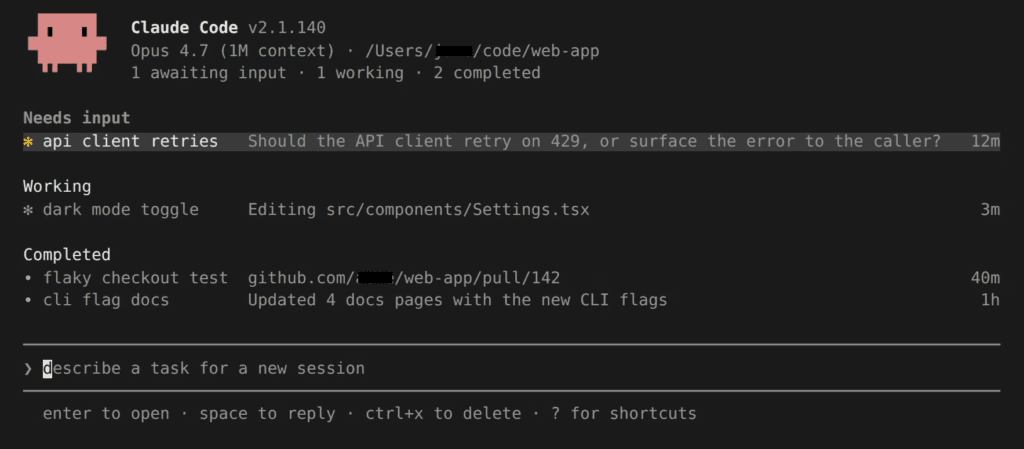
2. Claude Code — This isn’t just autocomplete. Rather than just autocompleting lines, Claude Code takes on entire projects autonomously: you describe what you want, and it plans and executes the work while checking in for input along the way.
3. More Nuanced Refusal — Claude is more likely to engage substantively with complex or nuanced topics rather than reflexively refusing. This makes it more useful for legal, medical, and research professionals.
4. Better Long-Document Analysis — With a larger context window and better token utilization, Claude handles 200-page PDFs, full codebases, and lengthy transcripts more coherently.
5. More Natural Prose — Independent blind tests consistently place Claude’s writing as more natural and context-aware. In a blind test across 8 different prompts with 134 participants, Claude won 4 out of 8 rounds while ChatGPT won just 1.
Common Mistakes to Avoid When Choosing an AI Tool
- Picking based on brand recognition alone. ChatGPT is the most recognized name, but it’s not the best tool for every job.
- Using Opus-tier API for all tasks. Sonnet delivers near-equivalent results at a fraction of the API cost. Reserve Opus for genuinely complex tasks.
- Judging on a single benchmark. SWE-bench, GPQA, and OSWorld measure different things. A model can lead one and lag another. Look at the benchmarks relevant to your actual use case.
- Ignoring ecosystem fit. If your whole workflow lives in Google Docs, the “best” model in isolation might still be the wrong choice for you.
- Assuming the free tier is representative. Free tiers are limited intentionally. Before dismissing a tool, test it at the paid tier with your real workloads.
- Over-relying on one tool. For most people, Claude + ChatGPT ($33/month) is the winning combination — you get the best writing, solid code generation, and conversation continuity.
Which AI Model Is Most Used Right Now?
Market share in 2026 tells an interesting story. SimilarWeb data from January 2026 found ChatGPT at approximately 64.5% versus Gemini at 21.5% share in web traffic, illustrating ChatGPT’s dominance.
But usage share and quality are different things. ChatGPT benefits from first-mover advantage, brand recognition, and a massive existing user base. Claude and Gemini are growing faster among professional users and developers who’ve specifically evaluated the tools.
Among enterprise users and developers, the picture looks quite different. Anthropic owned 54% of the enterprise coding market by early 2026. Claude has captured a disproportionate share of high-value professional usage even while ChatGPT dominates general consumer usage.
The Honest Verdict: Which AI Should You Choose?
After all the data, here’s my clear recommendation framework:
Choose Claude if: You write professionally, work with large codebases, need long document analysis, or value response quality over feature breadth.
Choose ChatGPT if: You need image generation, voice interaction, computer use, or you’re embedded in Microsoft’s ecosystem.
Choose Gemini if: You live in Google Workspace, need real-time research, are budget-conscious, or work with multimodal data like video and audio.
Choose Grok if: Real-time X data is core to your work, you want the fastest responses, or you need the largest context window for free.
For most professionals reading this guide: Start with Claude for your core work. Add ChatGPT if you need image generation or Microsoft integration. Use Gemini’s free tier for Google-native tasks. That combination covers 95% of professional AI use cases at a manageable cost.
Related Reading:
- ChatGPT vs Claude AI 2026 — In-Depth Comparison
- Perplexity AI Research Tools 2026: How USA Businesses Do Real Research Faster
- Best AI Tools for Shopify Stores 2026 — Boost Sales & Automate Everything
Conclusion
The best AI model in 2026 isn’t a single name — it’s the right tool for your specific workflow. Claude leads writing and coding. ChatGPT leads versatility and multimodal features. Gemini leads reasoning and Google integration. Grok leads speed and real-time data.
Stop looking for the perfect single AI. Start building a smart, task-specific toolkit.
If you’re only going to pick one: Claude Pro at $20/month delivers the best return for most knowledge workers and professionals. The writing quality, coding capability, and document analysis put it ahead for the vast majority of use cases that matter in a working day.
Ready to decide? Start with a free trial of the model that matches your primary use case — and come back in 30 days to tell us if we got it right.
Frequently Asked Questions
Which AI is best in 2026 overall?
There is no single winner. GPT-5.5 leads the overall Intelligence Index, Gemini 3.1 Pro leads scientific reasoning, Claude Opus 4.7 leads practical agentic coding, and Grok 4 leads raw SWE-bench scores. The best AI depends entirely on your primary use case.
Is Claude better than ChatGPT in 2026?
Claude is better for coding, writing, reasoning, and long-document analysis. ChatGPT is better for image generation, voice interaction, desktop automation, and ecosystem breadth. Both models are priced identically at the consumer tier ($20/month), so your decision should be driven entirely by use case, not cost.
Is Grok better than Claude?
For real-time data and speed, yes. For writing quality, coding consistency, and analytical depth, no. Grok is best for professionals who need live X/Twitter data or the fastest possible response times.
Why do some people say Claude is better than Gemini?
Benchmarks confirm Claude’s superiority in coding tasks, with Claude outperforming all competitors on several enterprise benchmarks including legal and financial tasks. Claude also produces more natural, nuanced prose. However, Gemini leads in reasoning benchmarks and is better for Google Workspace users.
Which AI is best for coding in 2026?
Claude is the practical winner. Claude dominates coding benchmarks and has become the default AI for many professional developers, powering tools like Cursor and Claude Code. Grok leads one raw benchmark (SWE-bench at 75%), but Claude dominates the actual developer tooling ecosystem.
What is the best free AI tool in 2026?
Gemini offers the most generous free tier, with web search and Google Workspace features included at no cost. Grok’s free tier is a strong runner-up with image generation included. Claude and ChatGPT have free tiers but with more meaningful limitations.
Is Claude free better than Gemini Pro?
For most text tasks, Claude Free is competitive with Gemini Pro. But Gemini Pro’s web search, multimodal capabilities, and Google Workspace integration make it more versatile overall. The better comparison is Claude Pro versus Gemini Pro, where Claude leads in writing and coding.
Which AI should I choose for business use in the USA?
It depends on your tech stack. Microsoft 365 users should evaluate ChatGPT or Microsoft Copilot. Google Workspace users should evaluate Gemini. Developers and knowledge workers should evaluate Claude. As of April 2026, ChatGPT is the broadest all-purpose choice, Claude is strongest for long-form writing and careful document work, and Gemini is a strong fit for Google-heavy workflows.
Is Grok 4 better than Claude Opus 4?
On raw SWE-bench coding scores, Grok 4 edges ahead. On writing quality, analytical depth, enterprise reliability, and developer tooling ecosystem, Claude Opus 4 leads clearly. For most professional applications, Claude Opus 4 remains the stronger choice.
What AI is more powerful than Claude?
No single model is comprehensively more powerful. There is no single best model — GPT-5.5 leads the overall Intelligence Index, Gemini 3.1 Pro leads scientific reasoning, Claude Opus 4.7 leads practical agentic coding. “More powerful” depends on the dimension being measured. Claude leads the dimensions most relevant to professional knowledge work.
Should I pay for Claude, ChatGPT, or Gemini first?
Most people should pay for ChatGPT first if they want one broad default assistant. Choose Claude first if long-form writing, analysis, and document-heavy work matter more. Choose Google AI first if your workflow already lives inside Google.
Still not sure which AI fits your workflow? Don’t waste hours switching between tabs — our free AI Tools Comparison Tool lets you stack Claude, ChatGPT, Gemini, and Grok side by side based on the features that actually matter to your work. No sign-up required.
Confused between AI tools? Try our free comparison tool: 👇
And if you’re a medical professional, dentist, or clinic owner — AI can do far more than answer questions. It can automate patient intake forms, appointment follow-ups, content generation, and internal workflows. But the setup has to be right for your practice. Generic tools won’t cut it.
Need custom AI automation built specifically for your medical practice or dental clinic?
Book a free 15-minute consultation — no pitch, just clarity on what’s possible for your specific setup. 👇

AI Nexte Editorial Team researches, tests, and reviews AI tools, workflows, and automation platforms for businesses, creators, and professionals. Our content is based on hands-on testing, industry research, feature analysis, and real-world use cases.








No Comments